Beyond the Doorbell: 5 Surprising Takeaways from the Intricate World of 'An Inspector Calls'
Beyond the Doorbell: 5 Surprising Takeaways from the Intricate World of 'An Inspector Calls'
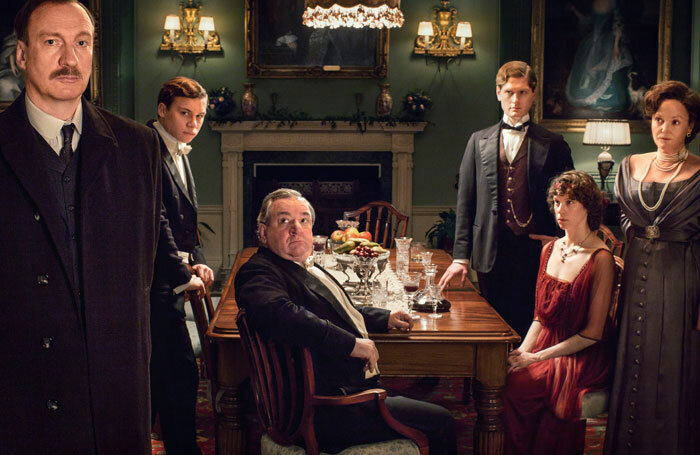
1. The Dinner Party That Never Ended: Setting the Stage for a Moral Mechanism
There is a profound, unsettling curiosity in watching a single evening dismantle a lifetime of social standing. In J.B. Priestley’s An Inspector Calls, the Birlings’ dining room is initially a site of suffocating "smugness." As the curtain rises, the family is insulated within a world that feels "pink and intimate," a visual manifestation of their detachment from the gritty reality of 1912 Edwardian society. However, modern audiences must recognize that Priestley did not intend for this to be a mere period piece or a cozy mystery. Instead, he engineered the play as a "conscious construct"—a deliberate moral mechanism designed to function as a "test" for both the characters and the reader's own ethical compass. The doorbell that interrupts Arthur Birling’s individualistic sermon does more than announce a visitor; it signals the start of a cold, hard interrogation that strips away the family’s detachment.
2. The Weaponisation of Irony: Why Arthur Birling is the Ultimate Unreliable Guide
Priestley utilizes dramatic irony not just as a narrative device, but as a surgical tool to perform a character assassination on Arthur Birling. Before the Inspector even enters, Birling delivers a series of pronouncements that the 1945 audience—having survived two world wars and the sinking of the "unsinkable" Titanic—would have recognized as laughably, tragically incorrect. By having Birling boast of a future "safe for capitalism" and dismiss the "nonsense" of war, Priestley portrays him as a "self-opinionated materialist" whose judgment is an absolute sham.
This ridicule serves a vital dramatic purpose: it ensures the audience immediately rejects Birling's worldview. He is not merely a man who is wrong; he is a physical manifestation of the complacency that Priestley sought to dismantle. By the time the interrogation begins, Birling has already been stripped of authority, leaving him defenseless against the Inspector’s collectivist logic.
"I didn’t notice you told him that it’s every man for himself." — Eric Birling, recalling his father's individualistic worldview.
3. Lighting as a Truth Serum: From 'Pink' to 'Brighter and Harder'
The play’s stagecraft offers a sophisticated visual metaphor for the transition from private delusion to public accountability. Initially, the lighting is "pink and intimate," a rose-tinted filter that shields the upper class from the consequences of their actions. This atmosphere signifies the "private sphere," where the Birlings' prosperity remains unexamined and their morality unchallenged.
Upon the Inspector’s arrival, the lighting shifts to become "brighter and harder." This is Priestley’s visual "truth serum," representing the transition to a state of "great scrutiny." The family is forced out of their insulated comfort and into the "public sphere," where their history is viewed with uncompromising clarity. This transition bridges the gap between Arthur Birling’s sham optimism and the visceral reality of Eva Smith’s death, suggesting that the "rose-tinted" isolation of the wealthy is a luxury the world can no longer afford.
4. The Transactional Soul: The Liminality and Rhetoric of Gerald Croft
Gerald Croft occupies a unique, "liminal" space in the Birling household. As the son of the Birlings' social superiors, he is the most "attractive" and "genial" figure, yet he sits in a dangerous "middle-generation" position—older than the impressionable Eric and Sheila, but younger than the rigid Arthur and Sybil. Gerald is the most insidious representative of entrenched privilege because he recognizes the system's flaws yet chooses to use them to his advantage.
Priestley exposes Gerald’s transactional worldview through a specific "semantic field of business and finance rhetoric." He does not "care" for Eva Smith; he "installs" her. His relationship with her is framed in terms of "in return" and "business." Even his grief is filtered through physical desire rather than moral recognition. Priestley utilizes aposiopesis—an abrupt break in speech—when Gerald describes Eva’s "soft brown hair and big dark eyes," revealing that he only feels the weight of the tragedy when remembering her physical beauty. Ultimately, Gerald is a symbol of how privilege resists change; he is the first to attempt to dismantle the "chain of events" once the threat to his reputation passes.
"There’s still no proof it was really the same girl." — Gerald Croft, attempting to alleviate his responsibility through a manipulation of the facts.
5. The Mystery of 'It': Eric Birling’s Disassociated Narration
Eric Birling is a study in "unreliable narration" and the evasion of responsibility. While he eventually appears more redeemable than his parents, his confession is saturated with "euphemistic phrases" designed to shield himself from his own actions. Specifically, Eric uses the pronoun "it" to describe his assault on Eva Smith, stating, "and that’s when it happened." This linguistic choice allows him to disassociate from the cruelty of his behavior.
More chillingly, Eric shifts into "third-person" narration to normalize his lack of restraint. By using the phrase "when a chap easily turns nasty," he employs the colloquial noun "chap" to trivialize the situation, implying that his behavior is a standard state for men of his class. This "limited responsibility" is a trap for the audience; while we may sympathize with his "bitter laugh" at his family's hypocrisy, Priestley reminds us that Eric is still a product of a patriarchal system that views women as "a good sport" rather than "members of one body."
"That state when a chap easily turns nasty." — Eric Birling, using third-person disassociation to normalize his actions.
6. The Eternal Return: Why the Cyclical Structure is a Warning
Priestley adheres to the "Three Unities" of classical Greek tragedy—place, time, and action—to create a sense of mounting, inescapable intensity. However, the play's "cyclical structure" is its most haunting structural method. By ending the play exactly where it began—with a phone call announcing a police inspector's arrival—Priestley suggests that the evening's events were merely a "test."
This "cliff-hanger" ending serves as a warning of the "eternal return." Because the older Birlings and Gerald refused to learn the lesson of social responsibility, they are "doomed to repeat the same mistakes." The cycle of interrogation and revelation will continue, with increasing "fire and blood and anguish," until a genuine change of heart occurs. The play does not end; it merely resets, waiting for the characters (and the audience) to prove they have finally understood their role in the "chain of events."
Conclusion: The Question Left Ringing
J.B. Priestley’s play is far more than a period drama; it is a physical manifestation of a set of beliefs put on trial. While the Birlings’ initial world was "pink and intimate," the Inspector leaves them—and us—with a "weighty" reality that refuses to be ignored. We are left to confront the Inspector’s final assertion: that we do not live alone, but are "members of one body." As the phone rings in the final moments, the question remains: will we recognize the "chain of events" that links our lives to the "millions and millions of Eva Smiths," or are we destined to wait for the doorbell to ring again?


