Grade 9 AQA English Creative Writing Guide 2026
GCSE English, AQA English Language, Creative Writing
How to Write a Grade 9 AQA English Language Creative Writing Response (2026)
Top-Band AQA English Creative Writing Guide 2026
How to Write a Top-Band AQA English Language Creative Writing Response (2026 and Beyond)
Step 1: Know the Creative Writing Task and the 2026 Mark Focus
Step 2: Use a Clear, Examiner-Friendly Structure (Without Being Boring)
A simple four-part structure for stories (AO5 friendly)
A powerful structure for descriptive writing
Step 3: Important Techniques That Make Your Writing Examiner-Ready
1. Show, don’t tell – but be selective
2. Sensory detail with purpose, not just lists
3. Structural techniques examiners love
4. Sentence variety that feels natural – not forced
Step 4: What the Examiner Is Really Looking For (2026 Top-Band Mindset)
What bores examiners – and how to avoid it
Step 5: Developing Your Story Without Losing the Examiner’s Interest
1. Stay close to one main moment
2. Use paragraphs as “beats” in your story
3. Balance action, description and inner thoughts
Step 6: Quick, High-Impact Revision Strategies for 2026 (Even Last Minute)
Step 7: A Simple Checklist Before You Hand In Your Paper
Final Thoughts: Turn the 2026 Mark Scheme into Your Secret Advantage
If you want your AQA English Language Paper 1 creative writing to stand out in the exams, you need more than a good imagination. You need clear structure, smart techniques, and an understanding of exactly what the examiner is looking for. This guide from Step Ahead English Tuition will walk you through how to build a powerful story or description that feels exciting to read – not like another dull script in a huge pile of papers.
Step 1: Know the Creative Writing Task and the 2026 Mark Focus
On AQA English Language Paper 1, Question 5 is your creative writing task. You will either:
Write a description based on a picture or prompt, or
Write a story based on a title, opening or scenario.
You are marked on two things:
AO5 – Content and Organisation (24 marks): ideas, structure, how engaging and controlled your writing is.
AO6 – Technical Accuracy (16 marks): vocabulary, sentence variety, spelling, punctuation and grammar.
The 2026 mark scheme will still reward the same core qualities: clarity, control, craft and accuracy.
Step Ahead English Tuition focuses on turning these abstract words into simple habits you can use in every practice piece – so by the time you walk into the exam, you already know how to “tick the boxes” while still sounding original and confident.
Step 2: Use a Clear, Examiner-Friendly Structure (Without Being Boring)
A strong structure does not mean a predictable, dull story. It means the examiner can follow your writing easily and see deliberate choices. Think of structure as the path the examiner walks through your piece. If the path is clear and interesting, they will reward you. If it is confusing or repetitive, they will not risk a high band.
A simple four-part structure for stories (AO5 friendly)
Hooked opening – drop us into a moment of tension, mystery or vivid detail. Avoid long backstory. Start in the scene: a sound, a line of dialogue, a specific image.
Development – build the situation gradually: zoom in on senses, reveal a small clue, show character reactions. Keep paragraphs focused on one clear idea each.
Turning point – something shifts. A decision, a discovery, a realisation. It does not need to be dramatic action; a quiet emotional shift still counts as a change in the story’s direction.
Controlled ending – echo something from the opening (an image, a phrase, a sound) so the piece feels complete. You do not need a Hollywood twist; you need a rounded finish.
💡 Pro Tip (from Step Ahead English Tuition)
Plan in boxes, not full sentences. Spend 3–4 minutes sketching your four parts in bullet points. This saves time and makes your structure more deliberate, which is exactly what examiners reward in the top bands.
A powerful structure for descriptive writing
For description, think of moving a camera through the scene. Instead of a “storyline”, you have a “journey of focus”:
Start wide – set the atmosphere (weather, light, overall mood).
Move closer – pick 2–3 key areas or objects to linger on in separate paragraphs (e.g. the broken window, the crowded platform, the silent sea).
Add a subtle shift – change in time, weather, or emotion (day to night, stillness to movement, fear to calm).
End by returning to one key image from the start, now seen differently because of that shift.
This kind of structure shows the examiner that you can organise ideas and maintain a clear focus, which is essential for the higher AO5 bands in the 2026 mark scheme.
Step 3: Important Techniques That Make Your Writing Examiner-Ready
Creative writing marks are not about throwing every technique you know onto the page. Examiners prefer a few well-controlled techniques that fit your piece. Here are the ones that reliably impress when used carefully.
1. Show, don’t tell – but be selective
Instead of telling us “he was scared”, show the fear through physical details and behaviour:
Telling: He was terrified of the dark corridor.
Showing: His fingers slipped on the light switch, slick with sweat, as the corridor swallowed the last of the daylight.
Used well, this technique proves to the examiner that you can craft implied meaning, which is a key part of higher-level creative writing. But do not “show” every tiny thing – choose the most important moments to zoom in on, so your story keeps moving.
2. Sensory detail with purpose, not just lists
The 2026 mark scheme will still reward precise, well-chosen vocabulary. Use the five senses, but always ask: “What mood am I creating?” Instead of listing random sounds and smells, pick ones that support your atmosphere.
For tension: sharp sounds, quick movements, cold sensations, tight physical feelings (e.g. “the metallic click of the lock”).
For calm: soft light, slow movement, gentle textures, warm or familiar smells (e.g. “the slow sway of the curtains in the late afternoon sun”).
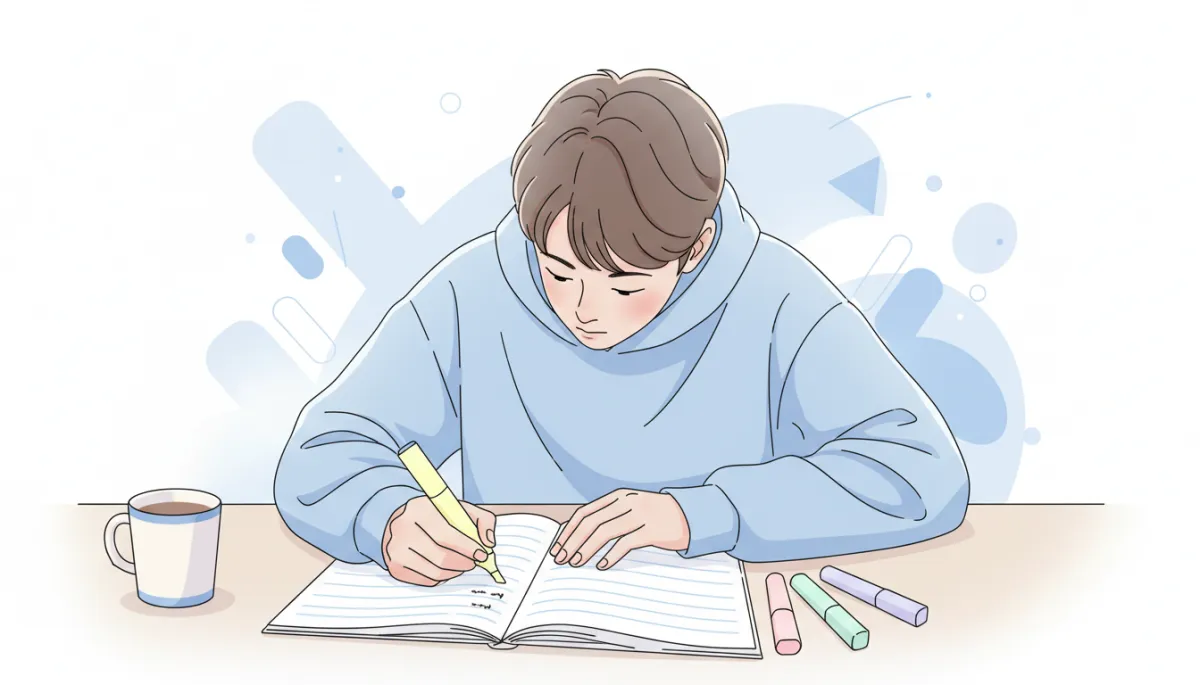
A quick, focused plan helps you choose techniques that actually serve your story.
3. Structural techniques examiners love
Zooming in and out: Start with a wide view, then zoom into one tiny detail, then zoom out again. This shows control over focus and keeps the examiner interested.
Echoing: Repeat a key word, phrase or image at the end that appeared at the beginning. It makes your piece feel satisfying and planned rather than rushed.
Contrast: Shift from light to dark, noise to silence, crowded to empty. This change gives your writing a sense of movement and development even in a short piece.
4. Sentence variety that feels natural – not forced
AO6 rewards varied sentence forms. That does not mean you must constantly switch length for no reason. Instead:
Use short sentences for impact or to slow the reader on a key moment: “The door moved.”
Use longer, flowing sentences to build atmosphere or show a character’s racing thoughts.
Try starting sentences in different ways – with adverbs (Slowly, she turned), prepositions (In the distance, a siren wailed), or -ing verbs (Clutching the letter, he hesitated).
Step Ahead English Tuition often gets students to highlight their sentences in three colours after writing: short, medium, long. If everything is the same colour, you know you need more variety next time – a simple but powerful way to train your AO6 control before the 2026 exam season.
Step 4: What the Examiner Is Really Looking For (2026 Top-Band Mindset)
Examiners are not searching for the “best story ever written”. They are looking for evidence that you can:
Meet the task – you actually respond to the prompt and stay focused on it throughout, not wander off into a different idea halfway through.
Organise clearly – your paragraphs make sense, ideas develop logically, and the piece feels like a whole, not a random collection of sentences.
Use language deliberately – vocabulary, imagery and sentence choices all seem chosen on purpose, not just thrown in to “sound fancy”.
Write accurately – spelling, punctuation and grammar are mostly correct, with only occasional slips, especially in the top bands.
📌 Key Takeaway
AQA’s 2026 mark scheme will still be about control. Even if your idea is simple, if you handle it with clear planning, purposeful language and mostly accurate writing, you can reach the higher bands.
What bores examiners – and how to avoid it
Examiners read hundreds of scripts. Certain patterns appear again and again – and they usually signal mid-band work. To step ahead (literally), avoid:
Cliché openings – “It was a dark and stormy night”, “I woke up and it was all a dream”, “Suddenly, I heard a noise”. Instead, start with a specific, original detail or line of dialogue.
Over-the-top action – explosions, car chases, dramatic deaths that you do not have space to develop properly. Small, believable moments often feel more powerful and controlled in an exam-length piece.
Endings that collapse – rushing the last paragraph, suddenly “waking up”, or adding a twist that makes no sense. Examiners prefer a simple but earned ending over a messy surprise.
Step 5: Developing Your Story Without Losing the Examiner’s Interest
A common problem in AQA creative writing is that the first paragraph is strong, then the piece slowly falls apart. To keep your examiner engaged from start to finish, focus on controlled development rather than constant new ideas.
1. Stay close to one main moment
You do not have time for an entire lifetime story. Choose a single moment and explore it in depth – the minutes before a race starts, the instant someone steps onto a plane, the first time they walk into a new school. This gives you space to:
Develop the character’s thoughts and feelings gradually.
Build atmosphere and tension without rushing.
Show a clear change or realisation by the end.
2. Use paragraphs as “beats” in your story
Imagine each paragraph is a “beat” – a small step in the story’s movement. To keep the examiner interested, each beat should add something new:
New piece of information (a clue, a memory, a detail about the setting).
New emotion or shade of emotion (from nervous to hopeful, from angry to resigned).
New decision or reaction from your character.
Avoid paragraphs that simply repeat the same idea with different adjectives. That is when an examiner’s attention starts to drift.
3. Balance action, description and inner thoughts
The most engaging exam pieces usually mix three elements:
Action – what is physically happening (he steps forward, the train arrives, the glass shatters).
Description – what the world around them looks and feels like (the colour of the sky, the sound of footsteps, the smell of rain).
Inner thoughts – what the character is thinking or remembering in that moment.
If you only have action, the story can feel rushed and shallow. If you only have description, it can feel slow and “nothing happens”. Blending all three keeps the examiner emotionally and intellectually engaged, which is exactly what the top AO5 bands describe.
Step 6: Quick, High-Impact Revision Strategies for 2026 (Even Last Minute)
You do not need months to improve your creative writing. With focused practice, you can make noticeable progress in days. At Step Ahead English Tuition, we focus on small, repeatable drills that build the exact skills the AQA mark scheme rewards.
10-minute openings: Practise just the first paragraph of different prompts. Aim for a clear hook, a strong image and a hint of conflict. This trains you to start confidently under pressure.
Sentence variety drills: Take a plain paragraph and rewrite it three times, changing sentence lengths and openings. Notice how the rhythm changes the mood – and how quickly your AO6 control improves.
Ending echoes: Write endings that repeat a word, phrase or image from the start. This habit alone can make your piece feel more sophisticated and planned, even if the idea is simple.
💡 Pro Tip
Time yourself. In the real exam, you will have around 45 minutes for Question 5. Aim to spend 5 minutes planning, 35 minutes writing, and 5 minutes checking accuracy. Practise this timing now so it feels natural in 2026.
Step 7: A Simple Checklist Before You Hand In Your Paper
In the last few minutes of the exam, use a quick mental checklist to make sure your piece hits the key points the AQA examiner is looking for:
Task focus: Have I clearly responded to the question and stayed on track?
Structure: Can I see an opening, development, turning point and ending (or clear descriptive journey)?
Techniques: Have I used a few key techniques (imagery, sensory detail, sentence variety, structural echo) with control?
Accuracy: Have I checked full stops, capital letters, basic spellings, and any dialogue punctuation?
Even a 2–3 minute check can lift you into a higher AO6 band, especially if it helps you correct repeated errors or add a final, neat echo to your ending.
Final Thoughts: Turn the 2026 Mark Scheme into Your Secret Advantage
Creative writing in AQA English Language is not about being “naturally good at English”. It is about understanding what the exam is really asking for and practising those skills in a focused, smart way. When you:
Use a clear, examiner-friendly structure,
Choose a few important techniques and use them with purpose,
Write with the AO5 and AO6 criteria in mind, and
Develop your story or description steadily, rather than trying to cram in everything,
you make the examiner’s job easier. And when their job feels easier, they are far more confident about awarding you the higher bands – especially in a demanding exam year like 2026.
At Step Ahead English Tuition, our aim is to give you fast, practical tools that you can use straight away, even if your exam is only weeks away. With targeted practice on structure, technique and examiner expectations, you can turn Question 5 from something you dread into one of your biggest opportunities to gain marks.
Ready to boost your creative writing marks quickly?
Start improving today by choosing a personalised revision package from Step Ahead English Tuition and get instant access to examiner-approved practice tasks, model answers and tailored feedback designed to lift your AQA English Language grade in hours, not weeks.


