GCSE English Revision Tips, Exam Guides & Tutoring Blog | Step Ahead
Explore expert GCSE English advice, Grade 9 revision guides, and exam strategies for AQA and other boards. Boost your English Literature and Language grades today.
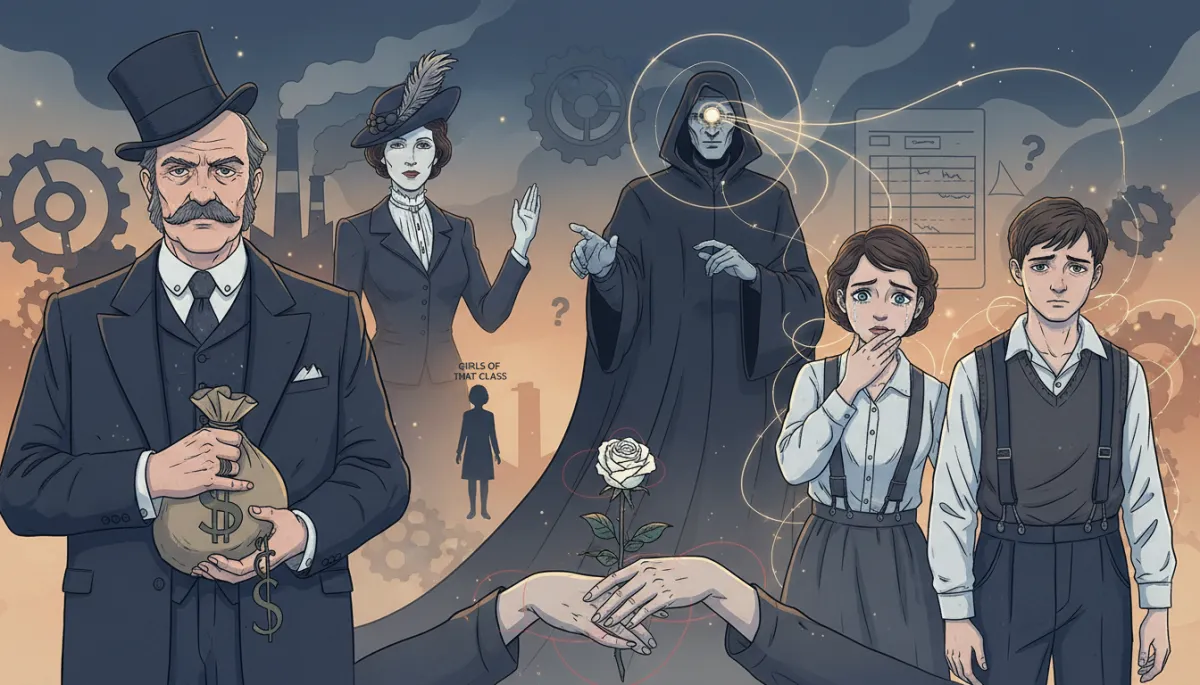
An Inspector Calls: Character Analysis Guide
GCSE English, An Inspector Calls, Character Analysis, Exam Revision

An Inspector Calls GCSE Revision Guide: How Priestley Uses Characters as Powerful Social Constructs
An Inspector Calls: Character Analysis Guide
An Inspector Calls GCSE Revision Guide: How Priestley Uses Characters as Powerful Social Constructs
Mr Birling: Unfettered Capitalism, Middle-Class Hubris and Patriarchal Control
Mrs Birling: Moral Hypocrisy, Static Arrogance and Class Prejudice
Sheila and Eric: A Malleable Younger Generation and the Hope for Change
Inspector Goole: Priestley’s Omniscient Socialist Mouthpiece and Secular Moral Judge
Eva Smith / Daisy Renton: A Silent Microcosm of the Exploited Working Class
Pulling It Together: Capitalism, Socialism, Class Prejudice and Moral Hypocrisy
Turn Character Analysis into Exam Marks with Step Ahead English Tuition
If you are revising An Inspector Calls for GCSE English, understanding the characters as deliberate constructs – not just “people in a play” – is one of the quickest ways to boost your grade. Priestley designs every character to represent ideas about capitalism, class, gender and responsibility. In this guide from Step Ahead English Tuition, we will unpack how each main figure works symbolically, and how you can turn that insight into high-level exam analysis.
Mr Birling: Unfettered Capitalism, Middle-Class Hubris and Patriarchal Control
Arthur Birling is not just an unlikeable businessman; he is Priestley’s embodiment of unchecked capitalism and complacent middle-class power. His speeches in Act One drip with confidence in profit and progress: he celebrates “lower costs and higher prices” and dismisses the possibility of war as “fiddlesticks”. This is not simply characterisation – it is dramatic irony used to expose the arrogance of capitalist certainty. The 1945 audience knew that two world wars and the Titanic disaster had already proved him wrong, so his speeches make him look foolish and dangerously short-sighted.
As a construct, Mr Birling represents unfettered capitalism that values profit over people. Sacking Eva Smith for demanding a fair wage shows how easily workers can be discarded. He talks about his employees as “cheap labour”, reducing human beings to economic units. In your exam, you can link this to Priestley’s critique of capitalism and his support for socialist ideas: by making Birling so self-satisfied and wrong, Priestley invites the audience to distrust his economic and moral beliefs.
Mr Birling also embodies middle-class hubris – the overconfidence and self-importance of those who believe their status makes them superior. He brags about his connections, his potential knighthood, and his business success. He is obsessed with how things “look” rather than how they are , worrying more about a “public scandal” than a dead young woman. This helps you discuss the theme of class prejudice : he assumes people like Eva are less important, and he expects his social position to shield him from consequences.
Finally, Mr Birling represents patriarchal control within both the family and society. He tries to control Sheila’s engagement, telling her and Gerald what a “tremendous” business opportunity their marriage will be, and he constantly talks over his wife and children. His authority is rarely challenged at first; he is used to being obeyed. Priestley uses this to show how patriarchy and capitalism work together : the same man who exploits workers also dominates his household. When the younger generation start to resist him, Priestley suggests that change is possible – but only if figures like Birling lose their absolute control.
💡 Step Ahead Tip: When writing about Mr Birling, always link his arrogance and mistakes to Priestley’s wider critique of capitalism and to the use of dramatic irony – this instantly lifts your analysis into higher bands.
Mrs Birling: Moral Hypocrisy, Static Arrogance and Class Prejudice
If Mr Birling represents capitalist greed, Sybil Birling represents the cold cruelty of upper-middle-class respectability . As chair of a charity organisation, she appears to be a moral guardian, yet her actions towards Eva Smith expose deep moral hypocrisy . She refuses Eva help, claiming she has only herself to blame. Her charity work, which should be compassionate, becomes a way to police and judge poorer women instead of supporting them. This contradiction – a “charitable” woman who is remarkably uncharitable – makes her a powerful symbol of how middle-class morality can hide selfishness .
Mrs Birling is also static : she does not change. While Sheila and Eric show guilt and growth, Sybil remains stubbornly convinced she has done “nothing wrong”. This static arrogance highlights Priestley’s frustration with those who refuse to learn from their mistakes. She repeatedly insists that the “girl” is entirely responsible for her own fate, even after discovering that Eva was pregnant with her grandchild. Her refusal to accept responsibility makes her a warning about what happens when people cling to their class superiority and never question themselves.
Perhaps the most quoted phrase linked to Mrs Birling is her reference to “ girls of that class ”. This short line is packed with meaning for your GCSE essays. The dismissive “girls” is patronising and dehumanising, while “that class” suggests people like Eva are all the same and inherently less worthy. Here, Priestley crystallises class prejudice and snobbery in a single phrase. Sybil sees social class as a moral category: the poor are automatically suspicious, the rich automatically respectable. This is exactly the mindset Priestley wants his audience to challenge.
📌 Exam Insight: When you quote “girls of that class”, zoom in on the pronoun and the phrase that class . Comment on how it reveals Mrs Birling’s prejudice and lack of empathy, and link it directly to social class and moral hypocrisy .
Sheila and Eric: A Malleable Younger Generation and the Hope for Change
In contrast to their parents, Sheila and Eric Birling are constructed as the malleable younger generation – capable of remorse, self-reflection, and ultimately systemic change . At the start of the play, Sheila appears shallow and childish, excited about her engagement ring and teasing Gerald. However, once she learns of her role in Eva’s sacking from Milwards, she reacts with genuine guilt: she says, “I’ll never, never do it again to anybody.” This emotional reaction marks the beginning of her moral development and aligns her with Priestley’s socialist message of responsibility and change.
Sheila becomes increasingly critical of her parents and begins to act almost as a “mini-Inspector”, questioning others and recognising patterns of behaviour. She tells her parents, “You’re beginning to pretend now that nothing’s really happened at all,” directly challenging their desire to move on. This shows that she has internalised the Inspector’s message about collective responsibility . For GCSE analysis, you can argue that Sheila symbolises the audience Priestley wants to create : young people willing to admit their faults and fight for a fairer society.
Eric’s journey is darker but equally important. At first he is awkward and sidelined, often mocked by his father. As the truth unfolds, we discover his heavy drinking and his exploitative relationship with Eva. Priestley does not excuse Eric’s behaviour, but he does show Eric’s capacity for remorse . Eric is horrified when he realises his mother turned Eva away, and he is one of the only characters to accept full moral responsibility: “We did her in all right.” His recognition that “it’s what happened to the girl and what we all did to her that matters” echoes the Inspector’s final speech and reinforces Priestley’s socialist ideas about shared guilt .

-toned photograph of a teenager highlighting quotes in a printed copy of An Inspector Calls,...
Focused annotation of character moments turns basic knowledge into top-grade analysis.
💡 Step Ahead Tip: Examiners love comparisons. Contrast Sheila and Eric’s growth with their parents’ stubbornness to show how Priestley presents the younger generation as the hope for a more equal, responsible society .
Inspector Goole: Priestley’s Omniscient Socialist Mouthpiece and Secular Moral Judge
Inspector Goole is perhaps the clearest example of a character functioning as a construct rather than a realistic person. He appears to know everything before it is said, guiding the narrative and controlling the pace of revelations. This near- omniscience positions him as Priestley’s mouthpiece – the voice through which the playwright delivers his socialist message. His final speech, warning that “we are members of one body” and that if people ignore this responsibility they will be taught it “in fire and blood and anguish”, directly reflects Priestley’s own beliefs about community and the consequences of selfishness.
Importantly, the Inspector functions as a secular moral judge . There is no religious language or reference to God; instead, he appeals to human responsibility and social duty. In an increasingly secular 20th-century Britain, Priestley suggests that morality should come from recognising our shared humanity, not just from religious rules. The Inspector judges each character’s treatment of Eva Smith and challenges them to face the real human cost of their actions. Even when they try to discredit him at the end, the moral impact of his visit remains – especially on Sheila and Eric.
The mystery surrounding who or what the Inspector really is – a real policeman, a hoax, a supernatural figure – matters less than his symbolic role . He stands for social conscience , forcing a complacent, privileged family to confront the consequences of their behaviour. For your GCSE essays, you can argue that Priestley deliberately keeps the Inspector’s identity ambiguous to emphasise his function as an idea rather than a realistic character: he is the embodiment of Priestley’s socialist critique and his demand for social change .
Eva Smith / Daisy Renton: A Silent Microcosm of the Exploited Working Class
One of the most striking choices Priestley makes is to keep Eva Smith (also known as Daisy Renton) completely offstage and voiceless . We never meet her, never hear her speak, and yet she is at the centre of the play. This is deliberate: Eva becomes a microcosm of the exploited working class , standing for countless real people whose stories were never heard or recorded. Her very name suggests this – Eva echoes “Eve”, the first woman, and Smith is one of the most common English surnames. She is simultaneously one person and every person oppressed by the system the Birlings represent.
Through the fragmented accounts we hear, Eva’s life traces a pattern of systematic exploitation . She is underpaid and then sacked for standing up for fair wages, used for entertainment and then discarded by Gerald, sexually exploited and abandoned by Eric, and finally condemned and rejected by Mrs Birling’s charity. Each middle-class character takes something from her – labour, beauty, affection, or dignity – and gives nothing lasting back. Priestley uses this to illustrate how capitalism and class prejudice work together to crush vulnerable individuals. Eva’s suffering is not an accident; it is the logical outcome of a society built on inequality.
Because Eva never speaks, the audience is forced to reconstruct her humanity from the limited, biased perspectives of the Birlings and Gerald. This silence can be read as a powerful comment on how working-class women, in particular, are often denied a voice in history and literature. For high-level GCSE answers, you can argue that Priestley deliberately keeps Eva offstage so that she becomes a symbol of all those silenced by class and gender oppression – and that the Inspector’s insistence that “there are millions and millions and millions of Eva Smiths and John Smiths” makes this symbolism explicit.
Pulling It Together: Capitalism, Socialism, Class Prejudice and Moral Hypocrisy
When you look at the characters of An Inspector Calls as constructs , it becomes much easier to see how Priestley weaves together his key themes. Mr Birling and Mrs Birling embody the failures of capitalism and class privilege : greed, arrogance, and a refusal to accept responsibility. Sheila and Eric represent the possibility of change – a younger generation who can reject their parents’ values and embrace a more socialist, collective outlook . The Inspector voices Priestley’s socialist ideas directly, acting as a secular moral judge, while Eva Smith symbolises the real human suffering created by selfishness, prejudice, and exploitation.
Across the play, Priestley exposes class prejudice in lines like “girls of that class” and in the way the Birlings talk about “these people” as if the working class are a separate species. He attacks moral hypocrisy by showing supposedly respectable characters behaving in cruel and irresponsible ways. At the same time, he promotes socialist ideas about community, shared responsibility, and the need for structural change. The play is not just about one family; it is a warning to all of us about what happens when we ignore our duty to others.
💡 Step Ahead Revision Strategy: For each key character, write a one-line summary of what they represent (e.g. “Mr Birling = unfettered capitalism and arrogant patriarchy”). Memorise these and use them in your introductions and conclusions to show the examiner you see the play as a carefully constructed political message , not just a story.
Turn Character Analysis into Exam Marks with Step Ahead English Tuition
Understanding the characters of An Inspector Calls as social and political constructs can transform your essays from simple retelling into sharp, conceptual analysis . That is exactly the kind of writing examiners reward in the higher bands. At Step Ahead English Tuition, we specialise in helping GCSE students move from “I know the story” to “I can analyse the writer’s methods and message” – even if your exam is only days away.
Our personalised revision packages for An Inspector Calls include character maps, quotation drills, model paragraphs and examiner-approved sentence starters that you can apply immediately to your own writing. Whether you are aiming for a pass or pushing for grades 7–9, we will show you how to use characters like Mr Birling, Mrs Birling, Sheila, Eric, Inspector Goole and Eva Smith to structure confident, high-impact responses under timed conditions.
If you want fast, effective support that fits around your busy schedule, Step Ahead English Tuition is here to help. Start improving today by choosing a personalised revision package and get instant access to focused, practical GCSE English support that can make a real difference in hours, not weeks.


Empowering students across the United Kingdom to reach their potential

Links
Legal
Newsletter
Join our community to stay updated on the latest courses, exclusive content, and learning resources. Subscribe now and take the next step in your educational journey!


© Copyright 2025. Step Ahead Tuition. All Rights Reserved. Powered by Lead Core.