GCSE English Revision Tips, Exam Guides & Tutoring Blog | Step Ahead
Explore expert GCSE English advice, Grade 9 revision guides, and exam strategies for AQA and other boards. Boost your English Literature and Language grades today.

Grade 9 AQA GCSE English Creative Writing Tips
AQA GCSE English, Grade 9 Writing, Creative Writing Tips, 2026 Mark Scheme, GCSE English Strategies, High Scoring Responses
Breaking Down a Grade 9 AQA GCSE English Language Creative Writing Response (2026 Mark Scheme)
If you’re aiming for a Grade 9 in AQA GCSE English Language, especially on the creative writing question, you’re in exactly the right place. In this guide from Step Ahead English Tuition, we’ll break down what a top-band response looks like under the 2026 Mark Scheme, show you why it reaches Grade 9, and give you clear, practical steps so you can start writing your own high scoring responses today.
BOOK A FREE GCSE STRATEGY CALL TODAY WITH A QUALIFIED TEACHER - CLICK HERE
What the 2026 AQA Creative Writing Question Is Really Asking For
On Paper 1, Question 5 of AQA GCSE English, you’ll be asked to produce a piece of descriptive or narrative writing. The 2026 Mark Scheme (like previous ones) focuses on two big areas:
Content and Organisation – how original, controlled, and well-structured your ideas are.
Technical Accuracy – how secure your spelling, punctuation, and grammar are and how confidently you use them for effect.
A Grade 9 writing response doesn’t just “sound nice”. It shows consistent control, ambitious vocabulary, shaping of the reader’s experience, and confident, accurate sentence crafting. Let’s see what that looks like in practice.
A Sample Grade 9 Paragraph – And Why Examiners Love It
Imagine the task is: “Write a description of a busy city street as the sun sets.” Here is a short extract from a Grade 9 style response:
The city exhaled a tired, amber glow as the sun slid behind the glass towers. Traffic lights blinked lazily, casting pools of colour that bled into the puddles at the kerb. A bus sighed at the stop, releasing a wave of warm, stale air and a tangle of hurried footsteps. Above, a lone gull wheeled and cried, its voice thin against the low, constant growl of engines and evening chatter.
Why this hits Grade 9 for Content and Organisation
Ambitious vocabulary used naturally: words like “exhaled”, “amber glow”, “bled”, “tangle” feel precise and purposeful, not forced.
Personification and imagery: the city “exhaled”; the bus “sighed” – this shows creative control and creates a mood of weariness at the end of the day.
Clear focus: the writer zooms in on a few details (lights, puddles, bus, gull) instead of listing everything. This is a key GCSE English strategy for high scoring responses.
Why this hits Grade 9 for Technical Accuracy
Varied sentence structures: a mix of longer, descriptive sentences and shorter, punchier ones (“A bus sighed at the stop…”) keeps the rhythm engaging.
Accurate punctuation: commas, full stops and apostrophes are all correct and help control the pace of the writing.
Spelling is secure: there are no distracting slips. At Grade 9, errors should be rare and usually minor.
💡 Pro Tip from Step Ahead English Tuition: When you read a strong model like this, don’t just think “That’s good.” Underline the powerful words, circle the punctuation choices, and label the techniques. Then, borrow the style (not the exact phrases) in your own practice pieces.
BOOK A FREE GCSE STRATEGY CALL TODAY WITH A QUALIFIED TEACHER - CLICK HERE
How the 2026 Mark Scheme Describes Grade 9 Writing
While wording can change slightly each year, the 2026 Mark Scheme for AQA GCSE English will still reward the same core qualities at the top band. In simple, student-friendly terms, Grade 9 creative writing usually means:
Content & Organisation (Band 4 – top level):“Compelling, well-controlled, and consciously crafted writing that shapes the reader’s response.” Ideas are developed in detail, the structure feels deliberate (not accidental), and there’s a clear sense of beginning, development, and ending.
Technical Accuracy (top band):“Consistently accurate spelling, punctuation, and grammar with a wide range of sentence forms used for effect.” You’re not just “correct”; you’re using language choices to create mood, tension, and rhythm.
When examiners see these features working together, they know they’re looking at Grade 9 writing. Your goal is to show them this level of control from the very first paragraph to the last line.
Breaking Down a Full Grade 9 Response: Structure, Style, and Strategy
Let’s sketch the shape of a high scoring response to the same city street task. You don’t need to copy this exact plan, but understanding the structure will help you build your own.
1. Hook the reader immediately
A Grade 9 answer doesn’t warm up slowly; it drops the reader straight into a vivid moment. For example:
By the time the sun reached the rooftops, the street was already humming with impatience.
This instantly sets time, place, and mood. It’s simple, but controlled and intriguing – a hallmark of strong GCSE English strategies.
2. Zoom in and out with purpose
Grade 9 writers control the “camera”. They don’t just list: “there were cars, people, lights, shops.” Instead, they:
Zoom in on a detail – a flickering sign, a child’s dropped ice cream, a man checking his watch.
Zoom out to show the whole scene – the glow of the sky, the roar of traffic, the blur of headlights.
This back-and-forth creates a sense of movement and helps the examiner feel fully immersed in the world you’re building.
3. Develop a clear mood or “thread”
The best Grade 9 writing often has an emotional thread running through it: tension, nostalgia, loneliness, excitement. In our example, the mood might be tired but hopeful as the day ends. You show this by:
Choosing vocabulary that fits (e.g. “sighed”, “faded”, “softened” for tiredness; “sparked”, “glittered” for hope).
Using images that repeat or develop – maybe the sun appears at the start and returns at the end in a different way.
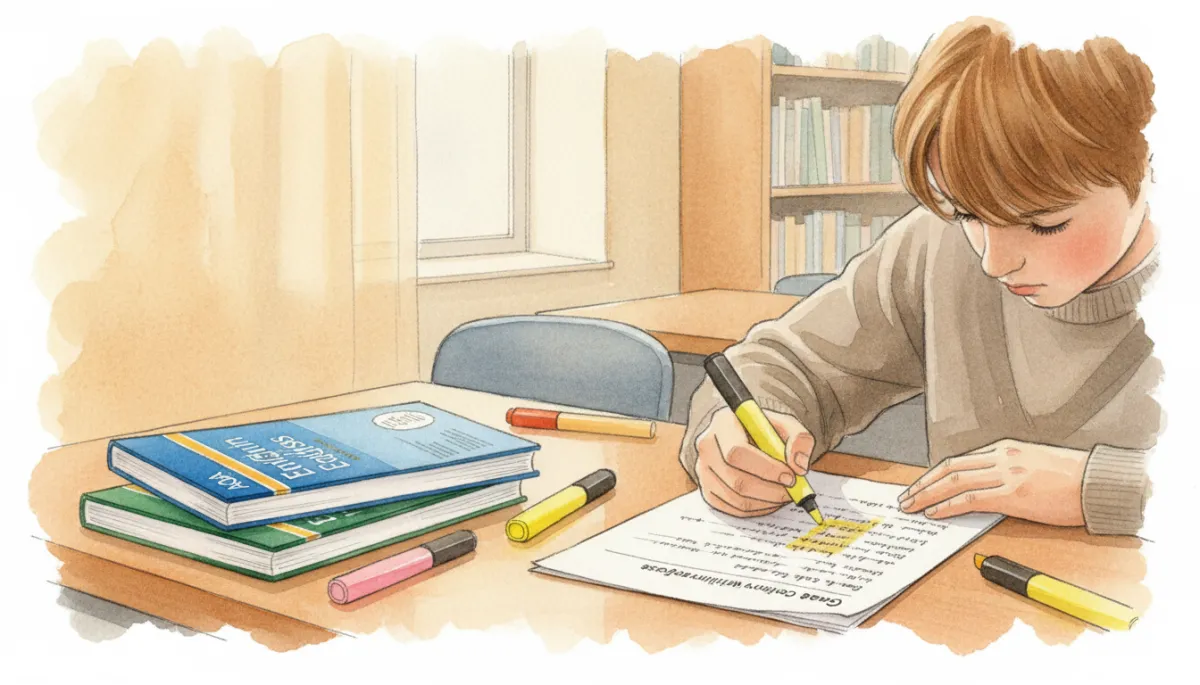
Analysing real Grade 9 responses helps you see exactly how top marks are earned.
4. Shape a satisfying ending
Examiners often see weak endings: sudden stops, rushed final lines, or random twists. A Grade 9 ending feels earned. It might:
Echo an image or phrase from the opening to give a sense of circular structure.
Shift the mood slightly – for example, from busy to calm as the street empties and the lights come on.
Even a single, well-crafted final sentence can leave the examiner thinking, “That was controlled from start to finish” – exactly the reaction you want for a high scoring response.
Actionable Steps to Boost Your Creative Writing to Grade 9 Level
Now to the part that matters most: what can you actually do, starting today, to give yourself the best chance of achieving a Grade 9 under the 2026 Mark Scheme? Here are practical, exam-focused creative writing tips from Step Ahead English Tuition.
Step 1: Learn the Mark Scheme Language – Then Translate It
Print or screenshot the AQA GCSE English creative writing mark scheme (2026 or the most recent version available). Highlight key phrases in the top band, like:
“Compelling, assured, sophisticated”
“Varied and ambitious vocabulary”
“Fluent, controlled sentence structures”
Then, translate each phrase into your own words and an action. For example: “Varied and ambitious vocabulary” → “I will swap three basic words in every paragraph for more precise ones (e.g. ‘big’ → ‘towering’, ‘loud’ → ‘piercing’).” This turns the mark scheme into a checklist you can actually use.
Step 2: Build a “Grade 9 Toolkit” of Techniques
High grades don’t come from throwing every technique you know onto the page. Instead, create a small, reliable toolkit you can use flexibly in any task. For example:
Sensory details – one detail for each sense (sight, sound, smell, touch, taste) across your piece, not all in one sentence.
Personification or metaphor – used once or twice, where it really fits the mood.
Structural moves – starting and ending with a linked image; zooming in on a key object; a one-sentence paragraph for impact.
💡 Pro Tip: At Step Ahead English Tuition, we encourage students to keep a “technique bank” in their revision notes. Every time you spot a clever move in a model answer, add it to the bank with your own example sentence. This makes exam-day planning much quicker.
Step 3: Practise Micro-Tasks, Not Just Full Essays
Writing full 45-minute responses is important, but it’s also tiring and hard to fit into busy weeks. To improve fast, mix in short, focused tasks that target Grade 9 skills:
5-minute openings: Write three different first sentences to the same prompt. Choose the most engaging one and develop it into a short opening paragraph.
Detail drills: Take a boring sentence like “The car was parked outside the house” and rewrite it three ways, each with a different mood (creepy, cosy, tense).
Punctuation practice: Write five sentences using different punctuation for effect – colon, semi-colon, dash, ellipsis, and a short simple sentence.
These micro-tasks quickly sharpen the skills that the 2026 Mark Scheme rewards, without needing an hour every time you revise.
Step 4: Plan for 5 Minutes, Write for 30, Check for 10
A common myth is that Grade 9 writers don’t need to plan. In reality, they plan cleverly and quickly. A simple, exam-friendly plan might look like this:
Beginning – time of day, first striking image, hint of mood.
Middle 1 – zoom in on a character or object, use one strong technique (e.g. personification).
Middle 2 – shift the focus or mood slightly (e.g. from busy to calmer, from outside to inside).
Ending – echo the opening image, leave a final thought or image that fits the mood.
In the last 10 minutes, read your work as if you’re the examiner. Fix obvious spelling slips, tidy punctuation, and see if you can sharpen one or two dull words. These final tweaks can push a strong answer firmly into the top band for technical accuracy.
Step 5: Get Feedback That Matches the Mark Scheme
To move from a Grade 6 or 7 to a Grade 9, you need clear, honest feedback. Ask teachers, tutors, or use platforms like Step Ahead English Tuition to mark your work against the actual AQA GCSE English criteria. Specifically ask:
“Which band am I in for Content and Organisation, and why?”
“What one change would push me into the next band up?”
Focusing on one improvement at a time stops you feeling overwhelmed and leads to faster progress – especially useful if you’re revising close to the exam.
Common Mistakes That Hold Students Back from Grade 9
Knowing what not to do is just as important. Under the 2026 Mark Scheme, examiners see the same issues again and again. Avoid these traps if you’re serious about Grade 9 writing:
Overloading with clichés – “tears streamed down her face”, “heart was pounding”, “it was a dark and stormy night”. A few familiar phrases are fine, but rely on them too much and your writing feels less original.
Forcing “fancy” vocabulary – if you’re not sure what a word means, don’t use it. Examiners prefer simple but accurate over complicated and wrong.
Weak or rushed endings – try not to run out of time. Even three or four lines that round off your piece can make a big difference to the overall impression.
Poor paragraphing – huge blocks of text are hard to read and suggest weaker organisation. Aim for clear, purposeful paragraphs, each with a mini-focus.
Bringing It All Together: Your Grade 9 Action Plan
Let’s summarise your next steps in a simple plan you can start using straight away, whether your exam is months away or just around the corner:
Study the 2026 Mark Scheme and turn top-band phrases into clear, personal targets.
Analyse Grade 9 models – highlight vocabulary, structure, and techniques that impress you, then imitate the style in your own practice.
Build your creative writing toolkit – a small set of reliable techniques you can adapt to any task.
Practise short, focused tasks several times a week, not just full exam answers, to sharpen specific skills quickly.
Use a timed exam routine – 5 minutes planning, 30 minutes writing, 10 minutes checking and improving.
Seek targeted feedback that tells you exactly what to fix to move up a band.
How Step Ahead English Tuition Can Support Your Grade 9 Journey
You don’t have to figure all of this out alone. At Step Ahead English Tuition, our focus is simple: to give you the quickest, most effective ways to boost your GCSE English grades, even if you’re starting late or feeling stuck at a certain level. Our resources and personalised study plans are built around:
Clear, examiner-approved GCSE English strategies that match the latest 2026 Mark Scheme.
Model high scoring responses with annotations showing exactly why they achieve top marks.
Fast, focused feedback on your own creative writing, so every piece you write moves you closer to Grade 9.
📌 Key Takeaway: Grade 9 isn’t about being “naturally talented”. It’s about understanding what the examiner wants, practising smartly, and using proven strategies that you can rely on under pressure.
Ready to Start Writing Like a Grade 9 Student?
You now know what a Grade 9 AQA GCSE English Language creative writing response looks like, why the 2026 Mark Scheme rewards it, and – most importantly – the concrete steps you can take to get there yourself. The difference between a solid answer and a Grade 9 writing response is often just a handful of deliberate choices: a clearer structure, more precise vocabulary, a stronger ending, and a few extra minutes of checking.
If you’d like structured support, annotated model answers, and personalised guidance that fits around your schedule, Step Ahead English Tuition is here to help. Our goal is to make top grades feel achievable, even if you’re starting late or juggling a lot of subjects.
Start improving today by choosing a personalised revision package and get instant access to fast, proven GCSE English support. With the right strategies, a clear understanding of the mark scheme, and regular practice, that Grade 9 creative writing response is well within your reach.


Empowering students across the United Kingdom to reach their potential

Links
Legal
Newsletter
Join our community to stay updated on the latest courses, exclusive content, and learning resources. Subscribe now and take the next step in your educational journey!


© Copyright 2025. Step Ahead Tuition. All Rights Reserved. Powered by Lead Core.