GCSE English Revision Tips, Exam Guides & Tutoring Blog | Step Ahead
Explore expert GCSE English advice, Grade 9 revision guides, and exam strategies for AQA and other boards. Boost your English Literature and Language grades today.

Mr Utterson in Jekyll and Hyde: GCSE Revision Guide
GCSE English, Victorian Literature, Jekyll And Hyde Characters

Mr Utterson in Jekyll and Hyde: A Complete GCSE Revision Guide to a Quietly Dual Character
This GCSE Revision Guide from Step Ahead English Tuition takes a deep dive into Mr Utterson, one of the most important Jekyll And Hyde Characters. We will explore his personality, his role as a Reliable Narrator, how he reflects Dual Identities in Victorian Literature, and whether you should actually trust his version of events in the novel.
Why Mr Utterson Matters: More Than Just “The Boring Lawyer”
When students start a Mr Utterson Analysis, they often describe him as dull, sensible, or simply “the lawyer who tells the story”. On the surface, that is fair. He is calm, cautious, and famously described as “austere with himself”. However, if you are aiming for top GCSE grades, you need to go beyond that first impression. Mr Utterson quietly shapes how we see every event in the novel, and he also reflects the theme of Dual Identities almost as much as Jekyll and Hyde themselves.
Stevenson chooses Mr Utterson as our main guide through the mystery. That decision is not random. As a lawyer in Victorian London, Utterson represents respectability, rationality, and the professional middle class. At the same time, he has secrets, suppressed desires, and a strong curiosity about the darker sides of human nature. Understanding this mixture is essential for a high-level Mr Utterson Analysis and will help you write stronger exam responses on Jekyll And Hyde Characters and themes.
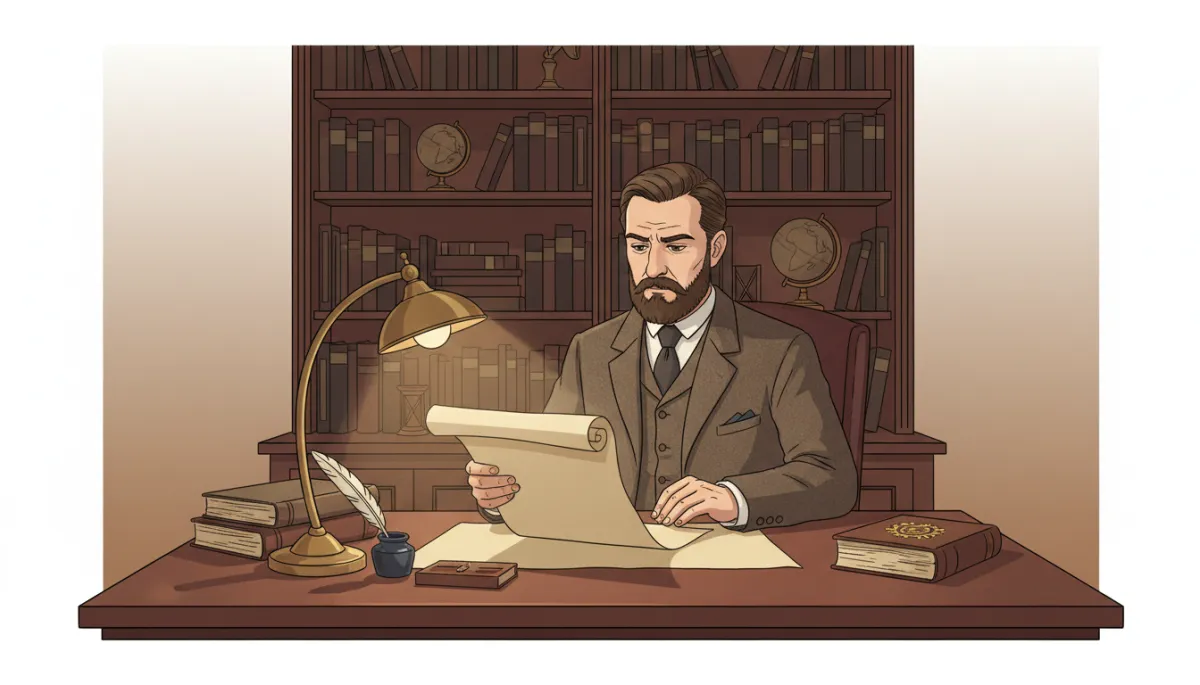
Utterson’s professional role helps Stevenson explore law, secrecy, and moral responsibility.
Mr Utterson and Victorian Context: Respectability, Repression, and Reputation
To understand Utterson fully, you must connect him to the historical context of the Victorian period. Late nineteenth-century Britain, especially in London, placed huge importance on respectability. Middle-class men like Utterson and Jekyll were expected to be calm, controlled, and morally upright in public. Reputation was everything. At the same time, Victorian society was full of anxiety about hidden sins, secret desires, and the possibility of moral collapse behind closed doors.
Utterson fits this world perfectly. He is a Victorian gentleman lawyer, careful about his clients’ reputations and his own. He keeps people’s secrets, avoids gossip, and tries to manage scandals quietly. This makes him a believable figure in Victorian Literature, but it also means he is naturally drawn to the mystery of Hyde. The idea that a respectable man like Jekyll might be linked to a violent outsider threatens everything Utterson believes about class, order, and morality. His investigation is not just about solving a puzzle; it is about protecting the fragile structure of Victorian respectability.
💡 GCSE Tip from Step Ahead English Tuition: When you write about Mr Utterson, always link his profession and personality to Victorian fears about reputation and hidden sin. This instantly pushes your answer into higher bands for context.
Mr Utterson as a Reliable Narrator – Or Is He?
One of the most important questions for GCSE students is whether Mr Utterson is a Reliable Narrator. On one level, he seems very trustworthy. He is sensible, honest, and not given to wild emotions. He does not drink heavily, he avoids scandal, and he is loyal to his friends. All of these qualities make him appear reliable in comparison with more extreme Jekyll And Hyde Characters like Lanyon or Jekyll himself. His calm tone helps the reader feel grounded, even as the plot becomes more shocking and gothic.
However, a strong Mr Utterson Analysis should also consider the ways in which he might be limited or even unreliable. He does not know the full truth until very late in the novel, and he often misinterprets clues. For example, when he first hears about Hyde trampling the girl, he assumes Hyde must be blackmailing Jekyll for some “ghost of some old sin”. This reveals Utterson’s tendency to imagine a conventional Victorian scandal (perhaps involving sex or money), rather than considering something more supernatural or psychological. His respectable mindset restricts what he is able to see.
Stevenson uses this limited viewpoint to build suspense. Because Utterson is our main lens on the story, we share his confusion and his gradual discovery. In that sense, he is a Reliable Narrator in terms of honesty, but he is not all-knowing. His reliability is shaped by his own beliefs, his social position, and his desire to protect his friends’ reputations. For GCSE exams, you can argue that Mr Utterson is both reliable and unreliable, depending on how you define those terms.
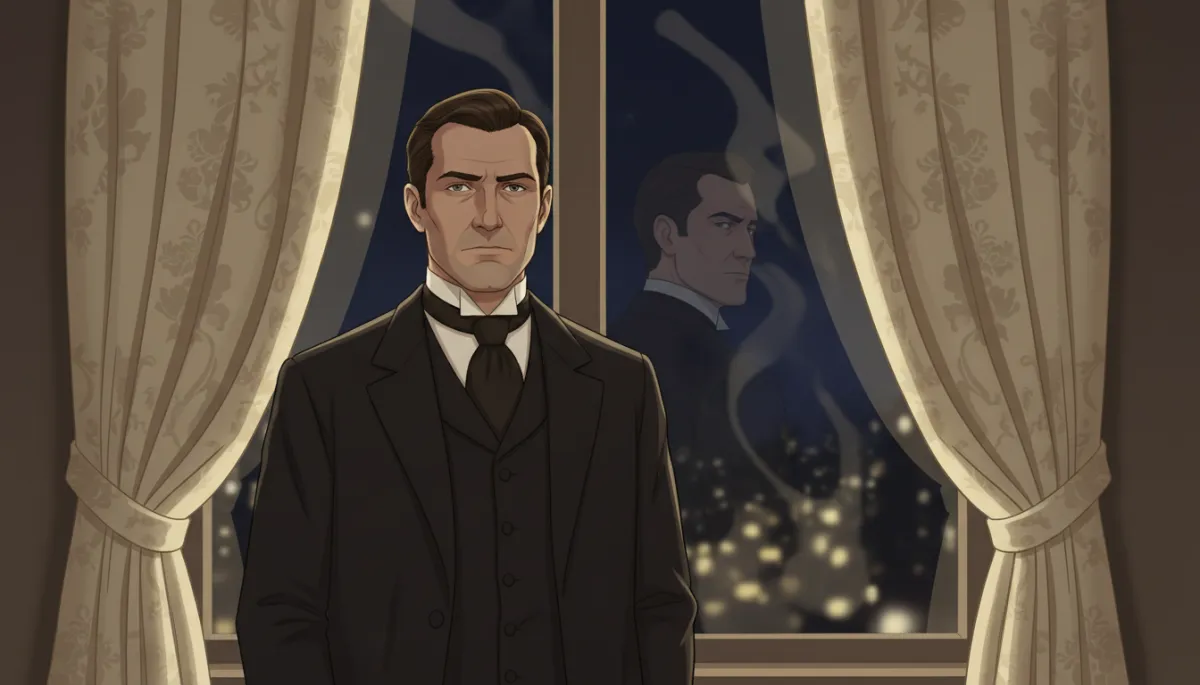
Utterson’s viewpoint shapes the mystery, but his assumptions can mislead both him and the reader.
Would You Trust Mr Utterson? Building a Balanced Argument
In an exam, a question might not directly ask “Do you trust Mr Utterson?”, but it could ask about his role as narrator or his relationship with other characters. Thinking about whether you personally trust him helps you develop a more evaluative, high-level response. Here is how you might build both sides of the argument.
Reasons to Trust Mr Utterson
He is consistently described as honest, loyal, and “the last good influence in the lives of down-going men”, suggesting moral strength and reliability.
He does not exaggerate or sensationalise events, which makes his account feel steady and believable, especially in a gothic text full of horror and shock.
He genuinely tries to protect Jekyll, even when he is confused or frightened, showing deep loyalty and emotional honesty.
Reasons to Question or Doubt Him
His commitment to reputation and secrecy means he sometimes prefers not to know the full truth, or to keep it hidden, which can distort his narrative.
He filters everything through his rational, legalistic mindset, so we never see events from a completely neutral or objective perspective.
His limited knowledge means that much of what he tells us is guesswork, speculation, or assumption until the final confessions from Lanyon and Jekyll.
💡 Exam Strategy: In your GCSE answer, aim to show both sides. You might conclude that Utterson is a Reliable Narrator in terms of honesty, but not in terms of complete understanding. Examiners reward this kind of balanced, critical thinking.
Mr Utterson and Dual Identities: The “Third” Split Personality in the Novel
When students think about Dual Identities in Jekyll and Hyde, they usually focus only on Jekyll’s physical transformation into Hyde. However, a more advanced Mr Utterson Analysis recognises that Utterson himself also embodies a quieter kind of duality. He is not literally two people, but he constantly balances two sides of himself: the outwardly cold, controlled lawyer and the inwardly curious, emotionally loyal friend who is drawn towards the mystery and darkness surrounding Jekyll.
Stevenson hints at this in the opening chapter, where Utterson is described as “cold” and “austere” in conversation, yet capable of “austere” pleasures, including his quiet enjoyment of wine and his affection for “down-going men”. He appears unemotional, but he actually cares deeply about people who are morally struggling. This tension between outward restraint and inward feeling makes him a perfect representative of Victorian Dual Identities: the respectable surface hiding complicated private emotions and temptations.
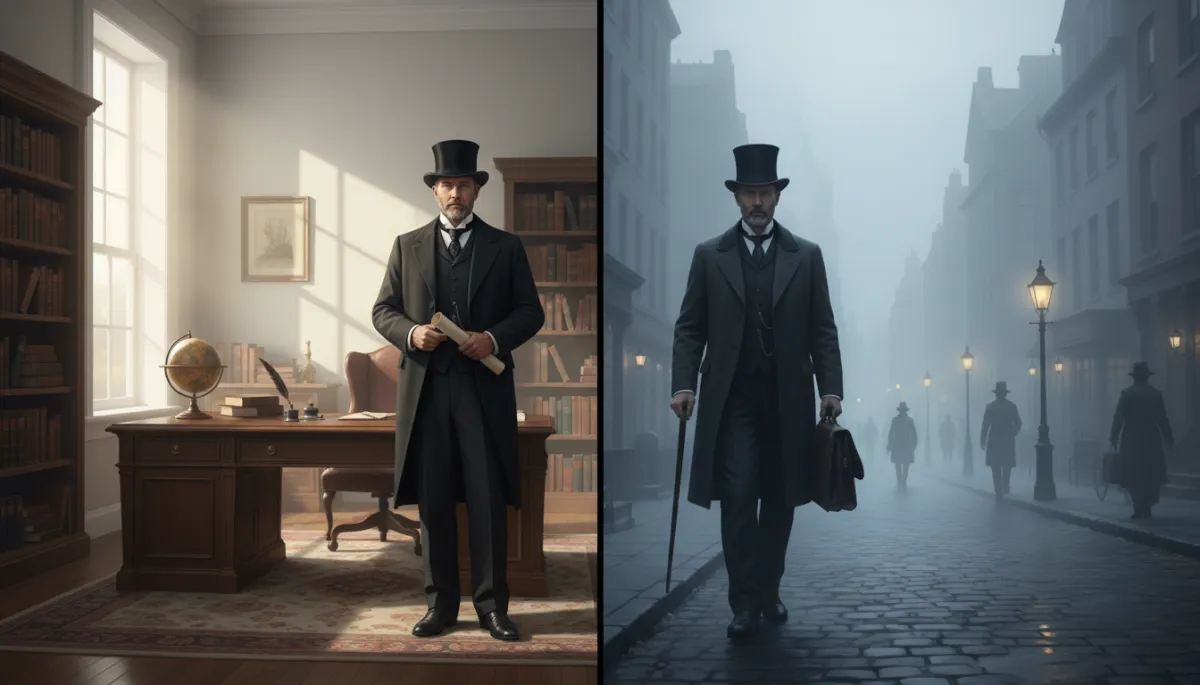
Utterson’s calm exterior hides curiosity and unease, mirroring the novel’s theme of divided selves.
In this way, Utterson acts as a bridge between the reader and the more extreme split within Jekyll. He is like a milder version of the same problem: a man who must keep his darker thoughts under control in order to function in polite Victorian society. Thinking about Utterson as a kind of “third dual identity” alongside Jekyll/Hyde will help your GCSE essay stand out, because it shows you understand how the theme runs through multiple Jekyll And Hyde Characters, not just the obvious one.
How Stevenson Uses Utterson to Control Structure, Suspense, and Revelation
From a structural point of view, Mr Utterson is absolutely central to the way the story is told. For most of the novel, we follow his investigations step by step: his conversations with Enfield, his visit to Jekyll, his encounter with Hyde’s door, his reading of wills and letters. This creates a detective-story feel, with Utterson as a kind of amateur investigator. By choosing such a rational, orderly character as our guide, Stevenson makes the strange events seem even more shocking. If Utterson is horrified, then the situation must be extremely serious.
At the same time, Stevenson withholds key information from both Utterson and the reader. We only learn the full truth in the final two chapters, which are presented as written documents: Dr Lanyon’s narrative and Henry Jekyll’s full statement. Until then, we are largely trapped inside Utterson’s limited understanding. This is a clever use of a Reliable Narrator: he tells the truth as he sees it, but his perspective is too narrow to grasp the whole horror. For GCSE, you can argue that Stevenson uses Utterson to control the pace of revelation, drip-feeding clues and increasing tension in a way that keeps readers engaged.
📌 Key Takeaway: Utterson is not just in the story; he shapes how the story is told. Linking his character to structure and narrative technique is an excellent way to reach the top levels of the GCSE mark scheme.
Linking Mr Utterson to Other Jekyll And Hyde Characters
For a strong GCSE Revision Guide answer, you should also show how Mr Utterson connects to other key figures in the novel. His relationships reveal more about his character and about Victorian society. For example, his friendship with Jekyll is based on mutual respect and shared social class. Utterson admires Jekyll’s scientific mind and generosity, but he is also disturbed by the will that leaves everything to Hyde. This tension reflects the Victorian fear that even the most respectable men might have dangerous secrets.
His relationship with Enfield, his distant cousin, shows another side of him. The two men take “Sunday walks” together, during which they share stories but deliberately avoid gossiping too much. This ritual suggests a need for controlled social contact, where even friendship is governed by rules of restraint. Meanwhile, his interactions with Lanyon highlight different responses to Jekyll’s experiments: Utterson is cautious but still open to mystery, whereas Lanyon is rigidly scientific and collapses when faced with the truth. Utterson’s ability to keep functioning, even after the final revelations, suggests a kind of emotional resilience or perhaps a continued willingness to suppress disturbing knowledge.
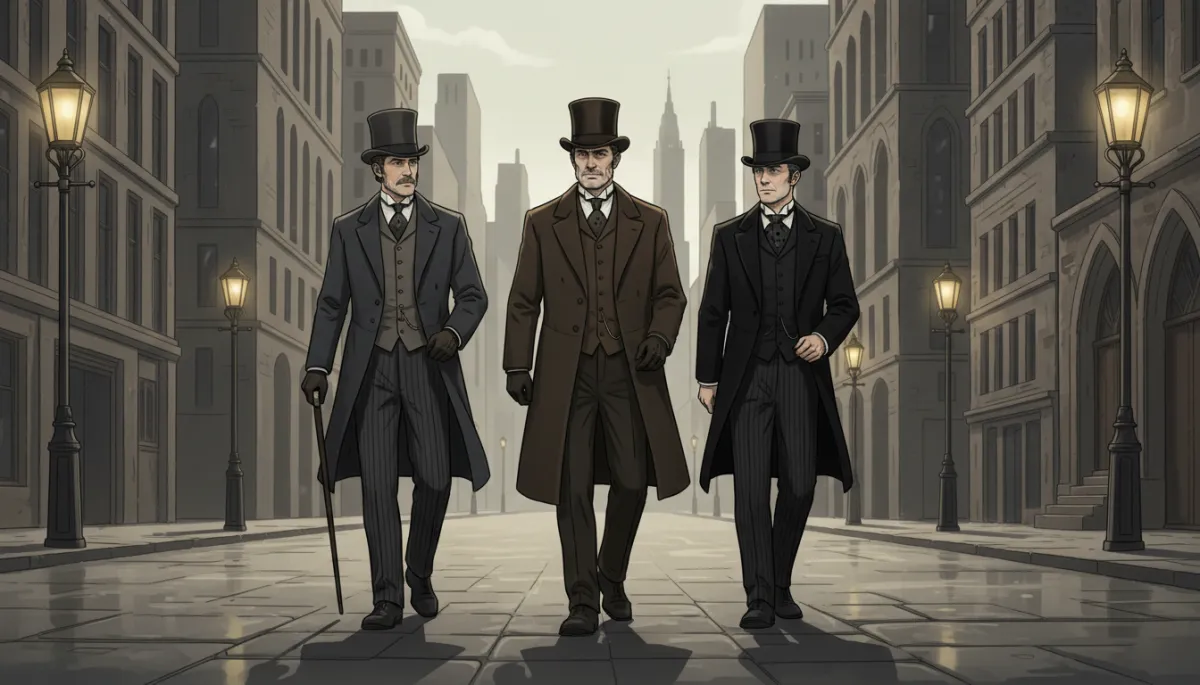
Utterson’s friendships reveal Victorian expectations of male respectability and emotional restraint.
Using Mr Utterson in Your GCSE Essays: Practical Revision Tips
To turn this Mr Utterson Analysis into exam success, you need to be able to use these ideas quickly and effectively in timed conditions. Step Ahead English Tuition focuses on fast, practical strategies, so here are some ways to do that:
Prepare a short, flexible character summary. For example: “Mr Utterson is a respectable Victorian lawyer and Reliable Narrator whose calm, limited viewpoint helps Stevenson explore Dual Identities, secrecy, and the tension between public reputation and private desire.”
Memorise two or three key quotations. Focus on ones that show his restraint (“austere with himself”), his loyalty (“the last good influence”), and his curiosity about Hyde. Use them to support any point you make about his personality or role.
Always link back to themes. Whenever you mention Utterson, connect him to Dual Identities, Victorian respectability, secrecy, or the idea of the Reliable Narrator. This shows examiners you are thinking thematically, not just retelling the plot.
Include a brief context point. For example, note that as a Victorian gentleman, Utterson reflects social anxieties about hidden sin and the pressure to appear respectable at all times.
💡 Quick Win from Step Ahead English Tuition: Turn your notes on Mr Utterson into a one-page GCSE Revision Guide with headings: “Character Traits”, “Narrator Role”, “Dual Identities”, “Victorian Context”, “Key Quotations”. Revising from this summary in the days before the exam can rapidly boost your confidence and grades.
Conclusion: Mr Utterson as the Quiet Heart of Jekyll and Hyde
Mr Utterson may not transform into a monster, but he is essential to understanding Jekyll and Hyde. As a central figure in Victorian Literature, he embodies the respectable, rational surface of society while hinting at the hidden tensions beneath. His role as a largely Reliable Narrator allows Stevenson to control suspense and structure, guiding the reader through the mystery at a measured pace. At the same time, his limitations, assumptions, and loyalty to reputation mean that we should not accept his version of events without question.
For your GCSE exams, remember that a strong Mr Utterson Analysis will do more than call him “sensible” or “boring”. Show how he reflects Dual Identities, how he fits into the historical context of the Victorian period, and how Stevenson uses him to explore secrecy, morality, and the split between public and private selves. If you can do that, you will not only understand one of the key Jekyll And Hyde Characters, but you will also be well on your way to higher marks.
If you would like more support turning these ideas into top-grade exam answers, Step Ahead English Tuition offers fast, focused resources and personalised study plans designed specifically for GCSE English. Start improving today by choosing a revision package that suits you and get instant access to expert guidance that can make a real difference in just a few hours.


Empowering students across the United Kingdom to reach their potential

Links
Legal
Newsletter
Join our community to stay updated on the latest courses, exclusive content, and learning resources. Subscribe now and take the next step in your educational journey!


© Copyright 2025. Step Ahead Tuition. All Rights Reserved. Powered by Lead Core.