GCSE English Revision Tips, Exam Guides & Tutoring Blog | Step Ahead
Explore expert GCSE English advice, Grade 9 revision guides, and exam strategies for AQA and other boards. Boost your English Literature and Language grades today.
Poetry Comparison Tips for AQA Power & Conflict
GCSE English, AQA Power & Conflict, Poetry Comparison

Poetry Comparison Shortcuts: How Three Core Poems Can Tackle Every AQA Power & Conflict Question
Poetry Comparison Tips for AQA Power & Conflict
Poetry Comparison Shortcuts: How Three Core Poems Can Tackle Every AQA Power & Conflict Question
Why Poetry Comparison Shortcuts Work (and Are Totally Allowed)
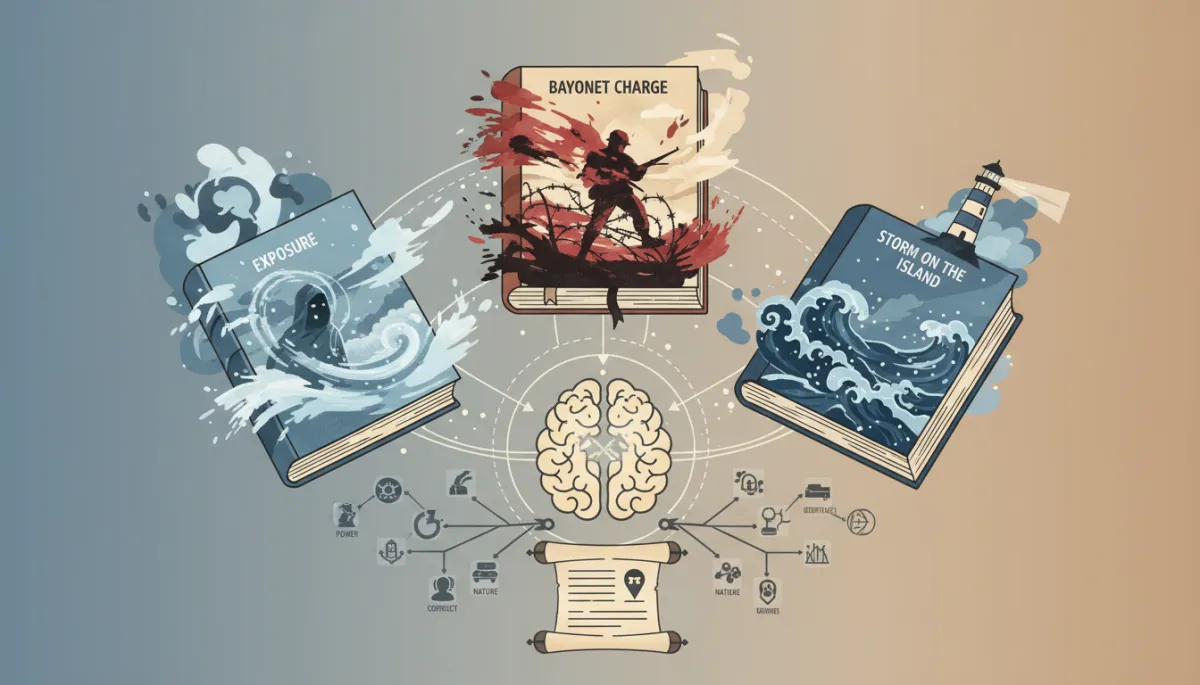
Meet Your Three Core Poems: The Ultimate Revision Trio
Core Poem 1: Bayonet Charge Analysis – Chaos, Fear and Split‑Second Decisions
Core Poem 2: Exposure Poem Themes – Suffering, Time and Nature as the Real Enemy
Core Poem 3: Storm on the Island – Nature, Power and Invisible Threats
Mapping the AQA Power & Conflict Prompts to Your Three Poems
1. Questions about the Reality of War or Conflict
2. Questions about Power and Control
3. Questions about Fear, Anxiety or Psychological Effects
4. Questions about Nature and the Environment
5. Questions about Individual vs Group, or Community Impact
A Simple, Repeatable Structure for Any Poetry Comparison Answer
Turning These Shortcuts into a One‑Page Revision Plan
How Step Ahead English Tuition Can Help You Go Further, Faster
Feeling overwhelmed by the AQA Power & Conflict cluster? You’re not alone. The good news is that with the right poetry study shortcuts, you don’t need to memorise every single poem in equal detail. In this guide, we’ll show you how three core poems – Bayonet Charge, Exposure, and Storm on the Island – can help you handle almost any Poetry Comparison question that appears in your GCSE English Literature exam.
Why Poetry Comparison Shortcuts Work (and Are Totally Allowed)
Let’s clear something up straight away: using Poetry Comparison shortcuts is not cheating. It’s simply smart revision. Examiners don’t reward you for knowing every poem perfectly; they reward you for answering the question clearly, comparing effectively and using relevant evidence. At Step Ahead English Tuition, we specialise in helping students achieve more in less time, and this approach fits that promise perfectly.
The AQA Power & Conflict cluster is built around a set of recurring ideas: power, conflict, nature, identity, war, memory, and the impact of events on individuals and societies. If you carefully choose a small group of poems that cover these themes in different ways, you can walk into the exam with a flexible toolkit instead of a foggy memory of fifteen texts. That’s exactly what this guide will help you do.
💡 Quick win: You only need to compare the printed poem with one other from memory. Knowing three poems really well is often more powerful than half-knowing all fifteen.
Meet Your Three Core Poems: The Ultimate Revision Trio
We’re going to build your Poetry Comparison strategy around three high‑value poems:
Bayonet Charge – for intense, chaotic war experience and inner conflict.
Exposure – for Exposure poem themes like suffering, futility, time, and nature as a brutal enemy.
Storm on the Island – for Storm on the Island as a study of power, fear, community and the unpredictability of nature.
Together, these three poems give you coverage of:
War and conflict (physical and psychological)
Power of nature vs human power
Fear, vulnerability and loss of control
Structure, form and language you can actually remember under pressure

Focusing on three versatile poems reduces stress and boosts exam confidence.
Core Poem 1: Bayonet Charge Analysis – Chaos, Fear and Split‑Second Decisions
Let’s start with a focused Bayonet Charge analysis. This poem is your go‑to for any question about the immediate experience of battle, panic, or the way conflict strips away identity and idealism. It drops us into the middle of a soldier’s charge, emphasising confusion and fear rather than heroism.
Useful angles you can reuse in many Poetry Comparison answers:
Conflict and identity: the soldier moves from patriotic slogans (“King, honour, human dignity, etcetera”) to raw animal instinct, “sweating like molten iron”. This helps with questions on how conflict changes people or strips away their humanity.
Structure as panic: enjambment and long, breathless lines mirror his stumbling run. You can link this to the form showing loss of control or overwhelming experience.
Nature in the background: the fields and the “green hedge” of the front line remind us that war invades ordinary landscapes, which connects beautifully to questions about place and conflict.
💡 Revision shortcut: Memorise two killer quotations – for example “patriotic tear” and “King, honour, human dignity, etcetera” – and one structural feature. That’s enough to make Bayonet Charge work hard in almost any war‑focused comparison.
Core Poem 2: Exposure Poem Themes – Suffering, Time and Nature as the Real Enemy
For the second poem in your trio, we focus on key Exposure poem themes. Owen’s soldiers are not charging; they are waiting, freezing, and slowly losing hope. This gives you a brilliant contrast with Bayonet Charge and a strong link to many different AQA Power & Conflict prompts, especially those about psychological conflict, the effects of war over time, and the power of nature.
Key themes to keep ready for your Poetry Comparison answers:
Suffering and futility: phrases like “but nothing happens” and “misery of dawn” show how endless waiting drains the soldiers’ hope. Great for any question about the long‑term impact of conflict or its pointlessness.
Nature as the main aggressor: “merciless iced east winds that knive us” personifies the weather as a violent attacker. This is perfect when the question mentions power, nature or threat.
Structure and repetition: the repeated refrain “but nothing happens” and the regular stanza pattern create a sense of endless, draining time. You can link this to emotional numbness and psychological damage.
💡 Poetry Study Shortcut: On your revision cards, write “Bayonet Charge = sudden chaos” and “Exposure = slow suffering”. This simple contrast gives you an instant comparison point for almost any war‑related question.
Core Poem 3: Storm on the Island – Nature, Power and Invisible Threats
The third poem in your toolkit, Storm on the Island, extends your range far beyond battlefields. It’s brilliant for questions about power, fear, nature, community, and unseen conflict. Even though it’s not a traditional war poem, it fits beautifully into the AQA Power & Conflict cluster because it explores how people live under constant threat.
Versatile angles you can reuse in many prompts:
Nature’s overwhelming power: the sea is described as “exploding comfortably” and the air itself becomes “a huge nothing that we fear”. This helps with questions about power, nature or unseen danger.
Community and preparation: the islanders build their houses solidly, suggesting human resilience in the face of conflict, whether natural or political. Great for prompts about responses to power and conflict.
Conversational tone and structure: the single, long stanza and direct address (“you know what I mean”) create intimacy and tension. This is handy when you’re asked about how poets present feelings such as fear or uncertainty.
💡 Confidence booster: If the question mentions nature, power, or fear, you can almost always bring in Storm on the Island as your comparison poem, even if the printed poem is about war or politics.
Mapping the AQA Power & Conflict Prompts to Your Three Poems
Now for the real shortcut: seeing how Bayonet Charge, Exposure and Storm on the Island can cover every single prompt type in the AQA Power & Conflict cluster. You won’t know the exact wording in advance, but the exam tends to recycle similar ideas. Here’s how to match them up.
1. Questions about the Reality of War or Conflict
If the question asks how poets present the reality of conflict, you’re in a strong position. Use:
Bayonet Charge for the immediate, physical chaos and fear of battle.
Exposure for the slow, grinding psychological impact and sense of futility.
Your Poetry Comparison could focus on how both poets reject glory and show soldiers as vulnerable, but in different ways and at different speeds.
2. Questions about Power and Control
When the question mentions power, think beyond just governments and leaders. You can bring in:
Storm on the Island – nature’s power over the islanders, and the way fear controls them even when “it is a huge nothing that we fear”.
Exposure – nature’s power over the soldiers, who are more threatened by the weather than the enemy.
This pairing lets you talk about how humans try to prepare or resist, but ultimately remain vulnerable to forces beyond their control.
3. Questions about Fear, Anxiety or Psychological Effects
Fear is everywhere in the Power & Conflict cluster, and your three poems cover it brilliantly:
In Bayonet Charge, fear is physical and immediate – the soldier is “stumbling” and “lugging a rifle numb as a smashed arm”.
In Exposure, fear is long‑term and draining, linked to hopelessness and “poignant misery”.
In Storm on the Island, fear is more abstract – the threat is invisible, yet it shapes how people build, live and think.
Any question on feelings, emotions or psychological conflict can be tackled by comparing how these poems present different types of fear and different responses to it.
4. Questions about Nature and the Environment
If the question refers to nature, the environment, or landscapes, you’re in an even stronger position. All three of your core poems are rich with natural imagery:
Bayonet Charge – the battlefield is a field that should be peaceful, but is invaded by war.
Exposure – nature is the main enemy, attacking with wind, snow and ice.
Storm on the Island – an entire community is shaped by the threat of storms and the power of the sea.
Your Poetry Comparison can focus on how nature is sometimes a backdrop to human conflict and sometimes the main source of danger and power.
5. Questions about Individual vs Group, or Community Impact
Many AQA prompts ask how poets present the effects of power or conflict on individuals and groups. Your trio works well here too:
Bayonet Charge zooms in on one soldier’s personal crisis and loss of identity.
Exposure shows a group of soldiers suffering together, sharing the same hopeless situation.
Storm on the Island focuses on a whole community, using “we” to show collective experience and resilience.
This gives you a ready‑made comparison: how conflict isolates some people but brings others together, and how different forms of conflict shape relationships and communities.
A Simple, Repeatable Structure for Any Poetry Comparison Answer
Knowing your three core poems is one half of the job. The other half is having a clear structure you can repeat in the exam. At Step Ahead English Tuition, we often recommend a flexible PEEC structure for AQA Power & Conflict:
Point – answer the question directly for the printed poem.
Evidence – use a short quotation or reference.
Effect – explain how the language or structure presents the idea in the question.
Compare – link to one of your three poems, using a quotation or clear reference.
Because you’ve already prepared a strong Bayonet Charge analysis, a set of Exposure poem themes, and key ideas from Storm on the Island, you can plug them into this structure quickly, even under time pressure. This is one of the most effective Poetry Study Shortcuts you can use in the exam hall.
💡 Exam tip: Aim for three solid comparison paragraphs rather than rushing four or five weaker ones. Depth beats quantity every time in AQA Power & Conflict.
Turning These Shortcuts into a One‑Page Revision Plan
To make these Poetry Comparison shortcuts really work for you, turn them into a simple, one‑page revision sheet. Here’s a quick way to set it up, exactly the kind of strategy we build into our personalised plans at Step Ahead English Tuition:
Divide the page into three columns: Bayonet Charge, Exposure, Storm on the Island.
Under each, write: 3 themes, 3 key quotations, and 2 structural features.
Around the edges, note which question types each poem is strongest for (war reality, power of nature, fear, community, etc.).
Spend ten minutes a day testing yourself from that sheet: cover one column and see how much you can remember, then check and correct. In just a few days, you’ll find your recall is much quicker and your confidence much higher.
How Step Ahead English Tuition Can Help You Go Further, Faster
These Poetry Comparison shortcuts are a powerful starting point, especially if you’re revising close to the exam or feeling behind. But you don’t have to do this alone. At Step Ahead English Tuition, we specialise in fast, focused GCSE English support that fits around your life and your deadlines.
We can help you:
Build personalised revision packs based on the AQA Power & Conflict cluster, including model answers using Bayonet Charge, Exposure and Storm on the Island.
Practise timed Poetry Comparison responses with clear, encouraging feedback so you know exactly how to improve your grade quickly.
Turn your notes into examiner‑friendly paragraphs that show off your understanding without overcomplicating things.
Our aim is always the same: to boost your confidence and your marks in the shortest possible time, using practical strategies that really work in the exam hall, not just on paper.
Final Thoughts: Three Poems, One Powerful Advantage
You don’t need to feel lost in a sea of poems. By focusing on Bayonet Charge, Exposure and Storm on the Island, you’re giving yourself a compact, reliable toolkit that can handle almost any AQA Power & Conflict question. With a clear Bayonet Charge analysis, a firm grip on Exposure poem themes, and a confident understanding of Storm on the Island, your Poetry Comparison skills will feel far more manageable – and far more exam‑ready.
If you’d like support turning these ideas into a personalised revision plan, Step Ahead English Tuition is here to help. Start improving today by choosing a personalised revision package and get instant access to fast, proven GCSE English support that can make a real difference in hours, not weeks.


Empowering students across the United Kingdom to reach their potential

Links
Legal
Newsletter
Join our community to stay updated on the latest courses, exclusive content, and learning resources. Subscribe now and take the next step in your educational journey!


© Copyright 2025. Step Ahead Tuition. All Rights Reserved. Powered by Lead Core.