GCSE English Revision Tips, Exam Guides & Tutoring Blog | Step Ahead
Explore expert GCSE English advice, Grade 9 revision guides, and exam strategies for AQA and other boards. Boost your English Literature and Language grades today.
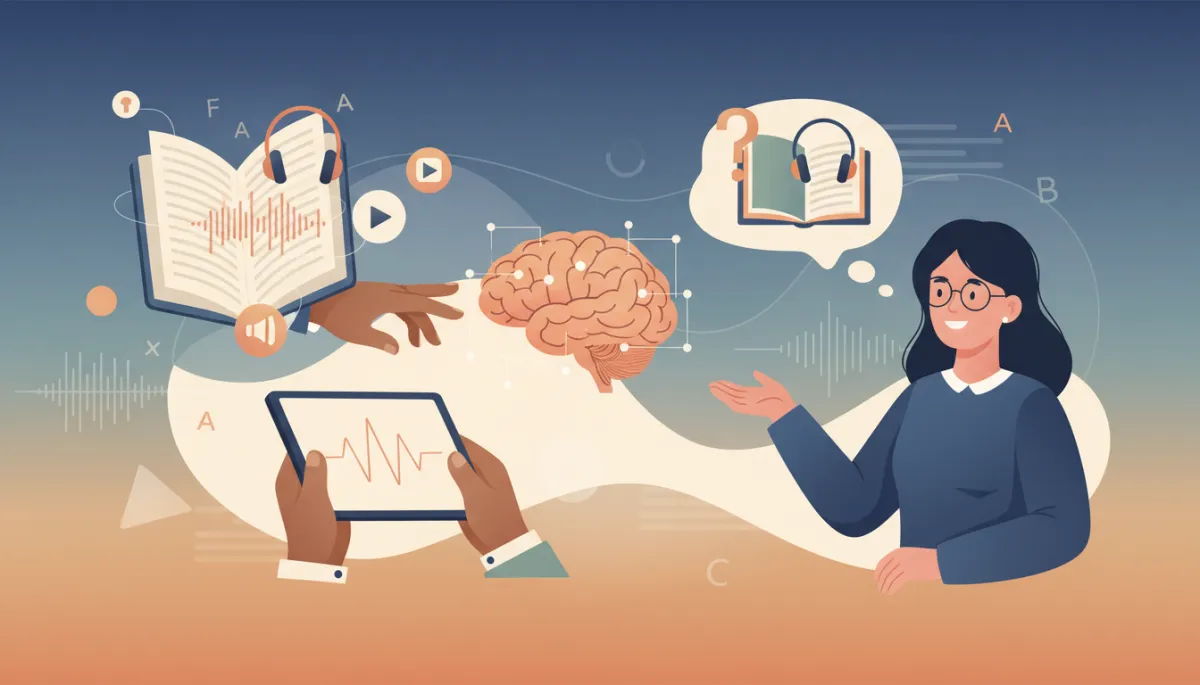
Is Listening to Audiobooks Real Reading?
Education, Audiobooks, Reading Goals

Is Listening to an Audiobook “Real” Reading? A Teacher’s Verdict
Is Listening to Audiobooks Real Reading?
Is Listening to an Audiobook “Real” Reading? A Teacher’s Verdict
Why This Question Matters More Than You Think
What Does Your Brain Do When You Listen?
Why Some People Still Say “It Doesn’t Count”
Audiobooks And Accessibility In Literature
Should Audiobooks Count Towards Your Reading Goals?
Practical Ways To Use Audiobooks For GCSE English
Be honest: do you count audio books toward your annual reading goal, or does it feel a bit like “cheating”? As a teacher working with GCSE English students every day at Step Ahead English Tuition, I hear this question all the time – from pupils and parents alike. Let’s unpack the Literary Debate calmly, kindly and with your actual learning in mind.
Why This Question Matters More Than You Think
At first glance, asking whether Audiobooks count as Real Reading sounds like a small, almost silly question. But underneath it sits something important: how you see yourself as a reader. If you secretly feel that listening “doesn’t really count”, you’re less likely to be proud of the time you spend with stories – and that can quietly damage your confidence, your motivation, and even your GCSE English grades over time.
At Step Ahead English Tuition, we care less about how you access a story and more about what your brain actually does with it. Are you understanding? Thinking? Questioning? Making connections? Those are the skills examiners reward – and they can absolutely grow through audiobooks when you use them well.
What Does Your Brain Do When You Listen?
Let’s talk Cognitive Processing – which is just a fancy way of saying “what your brain is busy doing”. When you listen to an audiobook, your brain is:
decoding spoken language and building meaning from it
holding information in your working memory so you can follow the plot or argument
creating mental images of characters, settings and events
predicting what might happen next and filling in implied meaning
These are exactly the same high-level skills you use when reading print. The main difference is the first step: with a physical book, your eyes decode letters; with an audiobook, your ears decode sound. After that, the deeper thinking is surprisingly similar. From a teacher’s perspective, that deeper thinking is what matters most for GCSE English success.
💡 Quick reassurance: If an audiobook helps you understand Shakespeare’s plot or the themes in a modern novel, that understanding is absolutely “real” – and it will help you in the exam room.
Why Some People Still Say “It Doesn’t Count”
So where does the resistance come from? The Literary Debate usually centres on one main point: when you read with your eyes, you’re also practising the mechanical skill of reading – recognising words on the page, dealing with tricky spellings, and handling punctuation yourself. For younger readers or those still building basic decoding skills, this practice is important and can’t be skipped completely.
Another concern is distraction. It’s easy to put on an audiobook while scrolling your phone, gaming, or half-listening. If your attention is split, your Cognitive Processing is shallow – you’re hearing the words, but not really reading the text in a meaningful way. In that case, critics are right: you’re not doing the same kind of thinking you’d do with a book in your hands.

Combining audiobooks with simple notes can turn passive listening into powerful revision.
Audiobooks And Accessibility In Literature
Now for a crucial point: Accessibility In Literature. Not everyone approaches texts from the same starting line. Some students have dyslexia or other specific learning difficulties. Others are learning English as an additional language. Some have visual impairments, or simply find dense blocks of text overwhelming after a long school day. For these students, audiobooks can be the difference between engaging with a story and giving up on it completely.
From an educational point of view, shutting the door on Audiobooks and declaring they are not Real Reading sends a damaging message: “If you can’t access the printed page easily, your reading doesn’t count.” At Step Ahead English Tuition, we strongly reject that idea. Your effort, your engagement and your understanding absolutely count – and audiobooks can be a powerful way to support all three, especially when you’re under pressure to improve your GCSE English grade quickly.
💬 Teacher’s verdict on accessibility: If an audiobook is what allows you to access the same text as everyone else, then using it is not “cheating” – it’s smart, fair and often essential.
Should Audiobooks Count Towards Your Reading Goals?
Let’s come back to that honest question: do you personally count audiobooks towards your Reading Goals? Here’s a teacher-approved way to think about it.
If your goal is “number of stories experienced” – then yes, an audiobook absolutely counts. You’ve followed the plot, met the characters and explored the themes.
If your goal is “improve my decoding and spelling” – then audiobooks alone are not enough. You’ll need some time with printed text as well, even if it’s shorter pieces.
If your goal is “boost my GCSE English grade fast” – then a blend works brilliantly: use audiobooks to get through longer texts efficiently, and then switch to key extracts on the page for close analysis.
In other words, whether audiobooks “count” depends on what you’re actually trying to achieve. For most students we support, the smartest move is to let audiobooks support your Reading Goals rather than replace every bit of print reading you do.
Practical Ways To Use Audiobooks For GCSE English
Here’s where we get really practical. If you want to use audiobooks as a serious revision tool – not just background noise – try these teacher-tested strategies from Step Ahead English Tuition:
Listen and follow the text. Whenever possible, have the book or a PDF open while you listen. Your eyes and ears working together strengthen both comprehension and spelling. This is brilliant for plays like Macbeth, where hearing the rhythm of the language helps it stick.
Use bookmarks, not just “vibes”. Pause to mark key scenes or quotes. Later, return to those sections on the page to annotate language, structure and themes – the exact skills exam questions test.
Summarise out loud. After each chapter, explain what happened in your own words. This simple step deepens Cognitive Processing and reveals quickly if you’ve actually understood or just “heard” the story.
Slow the narrator down. Many audiobook apps let you change the speed. Slowing slightly can give your brain more space to notice techniques and details, which is vital for high-mark analysis.
Pair listening with quick notes. Jot down character changes, key themes, or striking lines as you listen. These notes become instant revision cards when exams are close.
💡 Pro Tip from Step Ahead English Tuition: If you’re short on time, listen to the whole text as an audiobook first, then use targeted, examiner-style revision resources to zoom in on the most important scenes and quotations.
A Teacher’s Verdict: Is It “Real” Reading?
Here’s the honest verdict you’ve been waiting for. As a teacher, I would say: yes, listening to an audiobook can be Real Reading – when you are actively engaged, thinking about the text, and using it to grow your understanding. It is not a lazy shortcut by default. In fact, for many students it is the most efficient and accessible route into challenging literature.
However, for GCSE English, you cannot rely on audiobooks alone. You still need time with words on the page to practise close analysis, quotation recall and exam-style responses. Think of audiobooks as a powerful partner to your reading, not a complete replacement. When you use both together, you get the best of all worlds: Accessibility In Literature, strong Cognitive Processing, and practical exam skills.
Bringing It Back To You – And Your Next Step
So, back to that first question: will you count audiobooks towards your Reading Goals this year? If listening helps you finish texts you’d otherwise abandon, deepens your understanding, or makes revision less stressful, then you have every right to feel proud of that reading – because it is reading in all the ways that matter for your growth as a learner.
If you’re preparing for GCSE English and feeling the pressure, you don’t have to figure all of this out alone. At Step Ahead English Tuition, we specialise in fast, focused support that fits around your life – whether you learn best through printed notes, interactive resources, or carefully chosen audiobooks paired with smart revision strategies. Our examiner-approved tools are designed to turn the way you already like to learn into better grades, quickly.
Ready to move from “Am I cheating?” to “I’ve got a plan”? Start improving today by choosing a personalised revision package with Step Ahead English Tuition and get instant access to fast, proven GCSE English support that works in hours, not weeks.


Empowering students across the United Kingdom to reach their potential
Links
Legal
Newsletter
Join our community to stay updated on the latest courses, exclusive content, and learning resources. Subscribe now and take the next step in your educational journey!


© Copyright 2025. Step Ahead Tuition. All Rights Reserved. Powered by Lead Core.