GCSE English Revision Tips, Exam Guides & Tutoring Blog | Step Ahead
Explore expert GCSE English advice, Grade 9 revision guides, and exam strategies for AQA and other boards. Boost your English Literature and Language grades today.
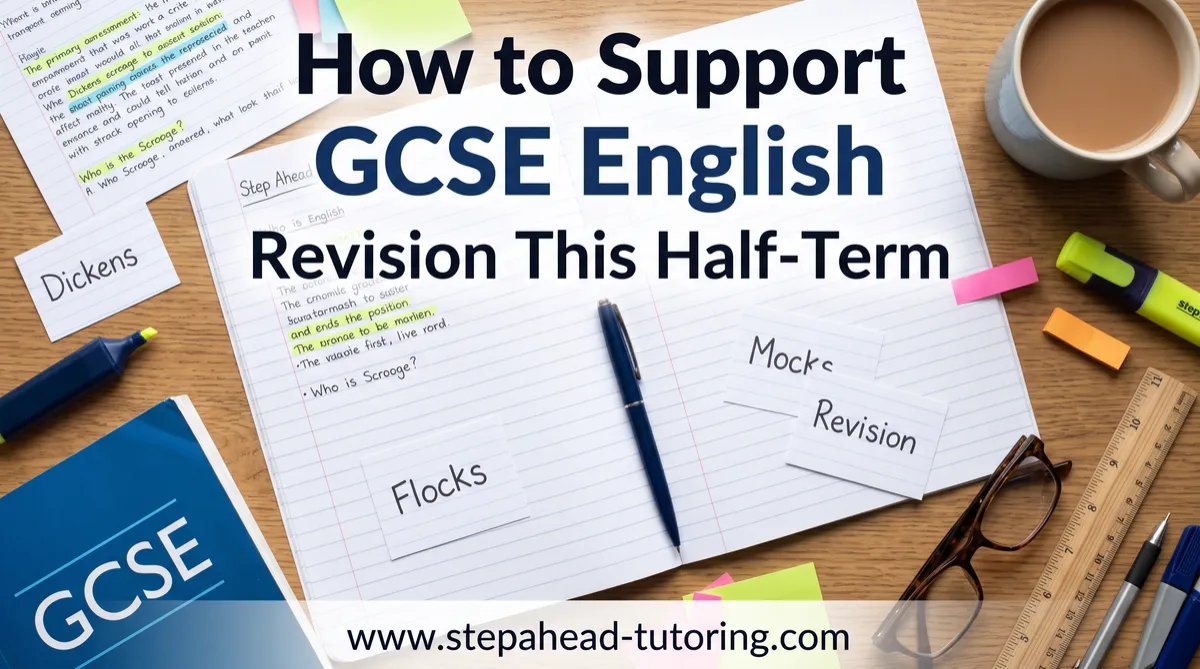
How to Help Your Child Revise for GCSE English Mocks: A Half-Term Guide for Parents

Half-term is often the last proper break before Year 10 and Year 11 mocks, and it is the point when many parents ask me the same question: "How can I help with GCSE English when I haven't read Macbeth since school?" The good news is that you don't need to be an English expert. What helps most is structure, calm encouragement and a willing audience, and those are things you can give at home.
Here is a practical guide to supporting your child's English revision over half-term, without it turning into a week of nagging.
Start by finding out exactly what's coming
A surprising number of students go into mocks unsure which papers they are sitting. Before planning anything, sit down together for ten minutes and find out:
The exam board: AQA, Edexcel, OCR or Eduqas. The papers and question types differ between them.
Which papers are in the mock: some schools set full Language and Literature papers, others only one or two.
Which set texts are being tested: for example the Shakespeare play, the 19th-century novel, the modern text and the poetry anthology.
The dates: so revision can be spread out rather than crammed into the final weekend.
If your child isn't sure, the school website or their English teacher will usually be able to tell you. Knowing the target turns "revise English" (which feels huge) into a short list of manageable jobs.
Plan a light, realistic half-term week
Half-term should still feel like a break. Thirty to forty-five minutes of focused English a day, with a day or two off, is far more useful than a heroic six-hour session that leaves everyone exhausted. Here is a sample week you could adapt:
Monday: Literature. Re-read two key scenes from the Shakespeare play and make five quote flashcards.
Tuesday: Language. One timed reading question from a past paper, then check it against the mark scheme.
Wednesday: Day off.
Thursday: Literature. Plan (don't write) two essay answers on the novel in bullet points.
Friday: Writing. One 45-minute piece of creative or opinion writing.
Saturday: Quick quote quiz with you, then pick one weak area to fix.
Sunday: Rest.
Let your child choose the times. A plan they've helped to build is a plan they're much more likely to follow.
Be the curious audience: the "teach-back" method
One of the most effective things you can do is ask your child to teach you. Explaining an idea out loud shows quickly whether they really understand it, and you don't need to know the answer yourself. You only need to keep asking "why?"
Here's how a five-minute conversation about A Christmas Carol might go. Your child tells you that in Stave One Dickens describes Scrooge as "solitary as an oyster". You simply ask: "Why an oyster?" A strong answer might sound like this:
Dickens compares Scrooge to an oyster because an oyster is hard and tightly closed on the outside, which suggests Scrooge has shut himself off from other people. But an oyster can also hide a pearl, so the image hints that there is something valuable inside him that the spirits might be able to bring out.
Notice that this answer does three things: it explains what the comparison means, it zooms in on the image, and it links to the bigger story. If your child's answer stops after the first step, a gentle "and what does that suggest about him?" is often enough to push them further. That extra step is exactly what examiners reward.
Help with quotes without becoming the examiner
Literature papers are closed book, so knowing short quotations really matters. You can help with low-pressure quizzing:
Read out the first half of a quote and let them finish it.
Stick a few quotes on the fridge or bathroom mirror and change them every couple of days.
Use spare moments, such as a car journey or waiting for dinner, for a two-minute quiz.
Keep it light. The aim is lots of short, successful practice, not a test they dread.
What to say (and what to avoid) about mocks
How we talk about mocks shapes how our children feel about them. Mocks are a rehearsal: their real value is in showing what to work on before the summer. Comments like "you need at least a 7" can add pressure without adding any direction.
Instead, try questions such as "What's one thing you want to try in this paper?" or "Which question do you feel most confident about?" When results come back, look at the teacher's feedback together before you look at the grade. A comment like "needs more analysis of language" is far more useful than the number at the top.
When extra support might help
Sometimes the same feedback appears again and again, or a student's confidence in English quietly drops. That's completely normal, and it's often the point where a fresh pair of eyes helps. Small, regular sessions focused on one skill at a time can make a real difference before the summer exams.
Key takeaways
Find out the exam board, mock papers and set texts before you plan anything.
Aim for 30–45 focused minutes a day over half-term, with days off built in.
Ask your child to teach you, and keep asking "why?"
Quiz quotes little and often, in a relaxed way.
Treat mocks as a rehearsal and focus on feedback, not just the grade.
If you'd like a clearer picture of where your child is with GCSE English before their mocks, I'd be happy to talk it through.
You can book a free GCSE consultation and we'll look at what would help most from here.
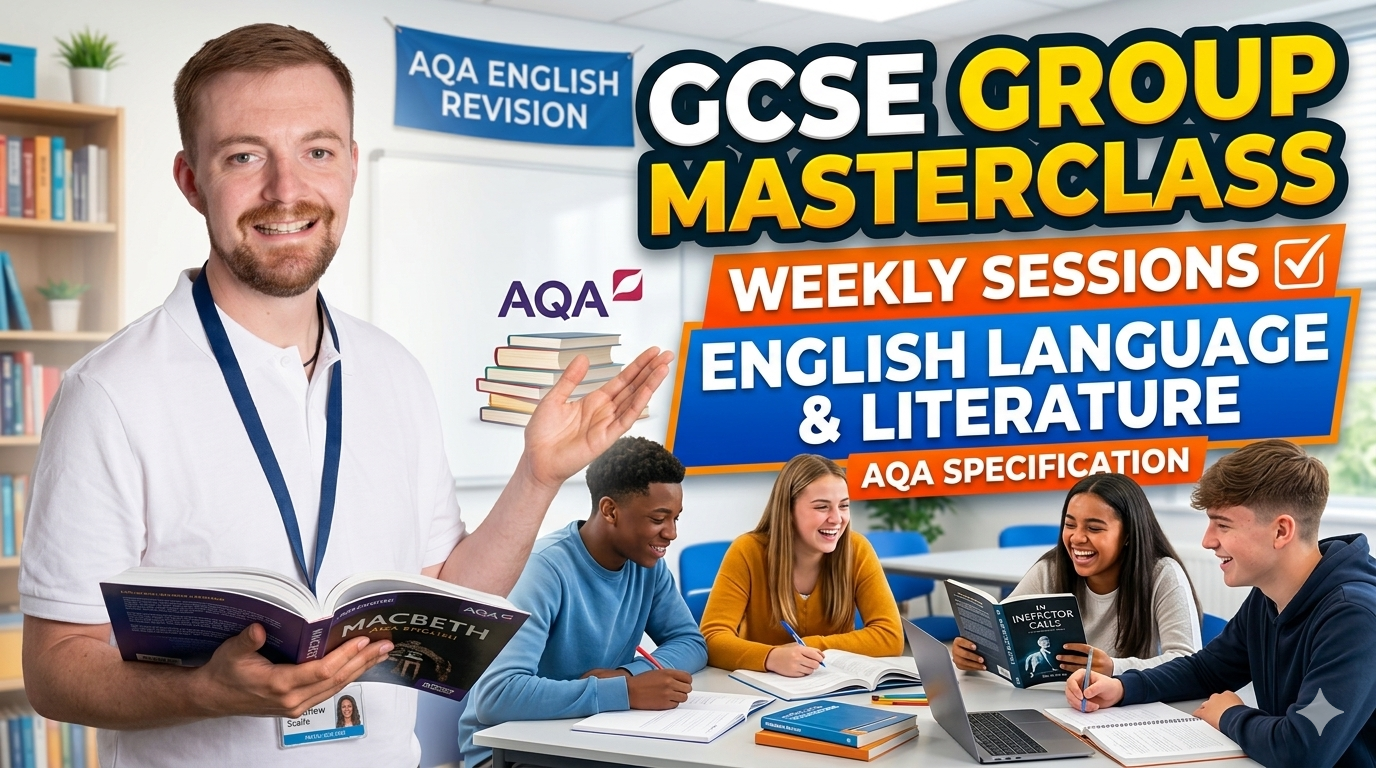


Empowering students across the United Kingdom to reach their potential
Links
Legal
Newsletter
Join our community to stay updated on the latest courses, exclusive content, and learning resources. Subscribe now and take the next step in your educational journey!


© Copyright 2025. Step Ahead Tuition. All Rights Reserved. Powered by Lead Core.