GCSE English Revision Tips, Exam Guides & Tutoring Blog | Step Ahead
Explore expert GCSE English advice, Grade 9 revision guides, and exam strategies for AQA and other boards. Boost your English Literature and Language grades today.
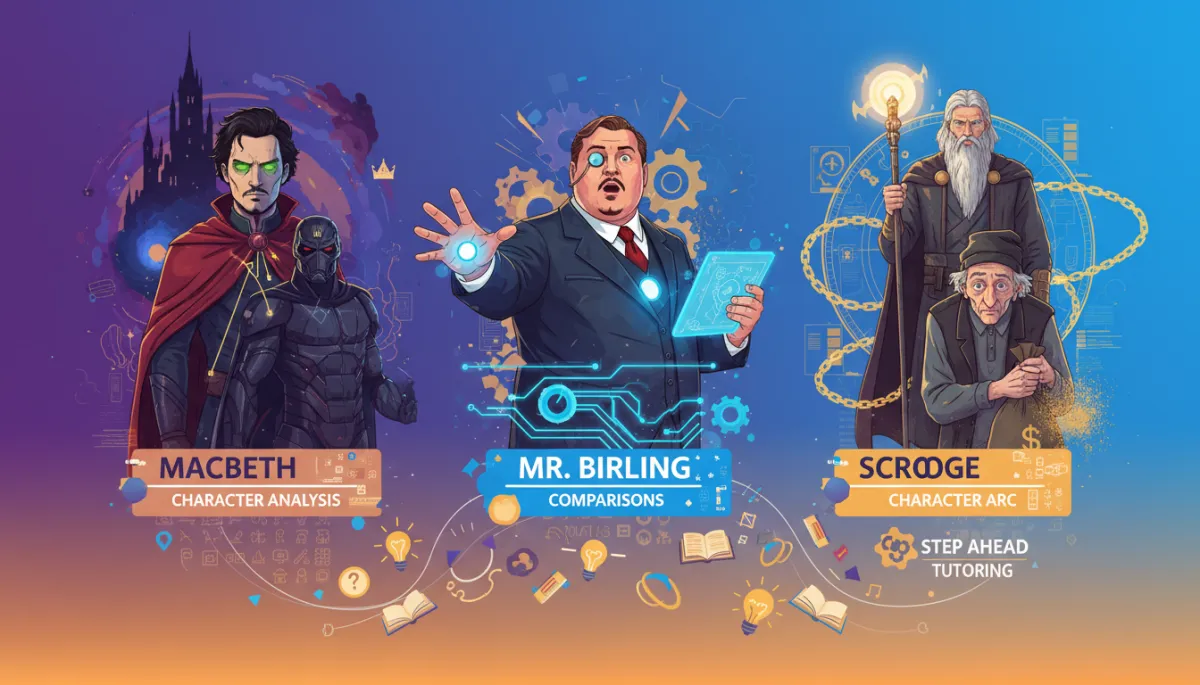
Macbeth, Birling & Scrooge as Marvel Characters
Macbeth Character Analysis, Mr Birling Comparisons, Scrooge Character Arc, Modern Marvel Connections, Literary Character Parallels, Step Ahead Tutoring
Macbeth, Mr Birling and Scrooge as Marvel Heroes and Villains: A Fun Guide for GCSE English Students
Ever wished Macbeth, Mr Birling and Scrooge could step out of your English texts and into a Marvel film? In this friendly guide, we’ll explore which modern Marvel characters they’re most like, how their character arcs compare, and how these literary character parallels can boost your grades in Macbeth Character Analysis, Mr Birling Comparisons and Scrooge Character Arc questions. We’ll also show you how Step Ahead English Tuition and the Step Ahead Tutoring masterclass lessons can turn revision into something surprisingly fun and entertaining – and how you can get exclusive tips straight to your inbox.
Why Comparing Classic Characters to Marvel Is a Smart GCSE Strategy
![Add Pictures from the Marvel Universe [Brand guidelines: use brand color palette #ffffff, #000000, #001219, #27ade2, #7bcce8]. Context: This is for a blog post about "Macbeth, Mr Birling and Scrooge as Marvel Heroes and Villains: A Fun Guide for GCSE English Students". Style: Professional quality, photorealistic, high resolution](https://images.leadconnectorhq.com/image/f_webp/q_80/r_1200/u_https://storage.googleapis.com/funnel-ai-production/blog-ai/jIUZYNTdnLW3pEVrlJkX/blog-1785434069781-knafko.png "Add Pictures from the Marvel Universe [Brand guidelines: use brand color palette #ffffff, #000000, #001219, #27ade2, #7bcce8]. Context: This is for a blog post about \"Macbeth, Mr Birling and Scrooge as Marvel Heroes and Villains: A Fun Guide for GCSE English Students\". Style: Professional quality, photorealistic, high resolution")
Linking Macbeth, Mr Birling and Scrooge to Modern Marvel Connections isn’t just a fun party trick – it’s a powerful revision technique. Examiners love answers that show you really understand a character’s journey, motivations and flaws. Marvel films and series are packed with clear, dramatic character arcs, so if you can say, “Macbeth is a bit like…”, and explain why, you’re already thinking at grade 7–9 level.
In this blog we’ll explore:
Which Marvel characters are closest to Macbeth, Mr Birling and Scrooge – and why.
How their character arcs rise, fall and (sometimes) redeem themselves.
How to turn these ideas into top-band exam paragraphs using Macbeth Character Analysis, Mr Birling Comparisons and Scrooge Character Arc as key phrases.
💡 Pro Tip: When you revise, try writing “Macbeth is like [Marvel character] because…” and finish the sentence in three different ways. You’re already practising high-level comparison skills.
Macbeth as a Marvel Character: From Honourable Hero to Tragic Villain
Macbeth and Loki: Ambition, Temptation and a Fall from Grace
For a strong Macbeth Character Analysis, you need to understand that Macbeth begins as a brave, respected warrior, then slowly becomes a ruthless tyrant. This journey mirrors the character arc of Loki in the Marvel Cinematic Universe. At first, Loki is clever, charming and overshadowed by his brother Thor. Like Macbeth, he feels he deserves more power and recognition. His ambition is fuelled by jealousy and a sense of injustice – just as Macbeth’s ambition is sparked by the witches’ prophecies and Lady Macbeth’s manipulation.
Both characters make a crucial choice. Macbeth chooses to murder Duncan; Loki chooses betrayal and invasion. Neither is forced. This is key for exams: you can argue that Shakespeare presents Macbeth as morally responsible for his own downfall, just as Marvel often shows Loki choosing chaos even when he has chances to turn back. Their arcs are tragic because they could have been heroes, but their own decisions turn them into villains.
Macbeth and Doctor Strange: “What If?” and the Cost of Power
Another fascinating Modern Marvel Connection is between Macbeth and Doctor Strange, especially in the animated series What If…? In one episode, Strange becomes obsessed with reversing a tragedy and keeps using forbidden magic to change time. Each spell makes things worse, but his hunger for control grows. This is extremely close to Macbeth’s journey after Duncan’s murder. Once Macbeth has tasted power, he cannot stop. He orders more killings – Banquo, Macduff’s family – trying to control his future and silence his fears.
In both arcs, the character begins with some positive qualities: Macbeth is “brave Macbeth”, Doctor Strange is a gifted surgeon. But their tragic flaw – Macbeth’s ambition, Strange’s arrogance – drives them to abuse power. The result is isolation, guilt and destruction. In an exam, you could write something like: “Macbeth’s descent into tyranny is similar to Marvel’s darker versions of Doctor Strange, as both men sacrifice morality and relationships in their desperate attempts to control fate.” That’s a powerful comparison sentence for a high-level essay.
Macbeth’s Character Arc in Three Simple Stages
Act 1–2: The Reluctant Hero – Macbeth is loyal and hesitant; he knows killing Duncan is wrong. Like an early-stage Marvel hero, he’s torn between duty and temptation.
Act 3–4: The Paranoid Villain – Once king, he becomes suspicious, violent and isolated, like Loki ruling Asgard or a corrupted Doctor Strange who cannot trust anyone.
Act 5: The Doomed Warrior – Macbeth realises the emptiness of his actions (“signifying nothing”) but fights on anyway. This tragic ending is similar to Marvel villains who only understand their mistakes too late.
💡 Exam Booster: Try using the phrase “Macbeth’s character arc mirrors a tragic Marvel anti-hero” in your introduction. It shows you’re thinking in terms of development, not just listing events.
Mr Birling as a Marvel Character: The Man Who Never Learns
Mr Birling and Tony Stark’s Father: Old Power, Old Attitudes
When you’re working on Mr Birling Comparisons for An Inspector Calls, it can help to imagine him as a Marvel-style industrialist. Think of Howard Stark, Tony Stark’s father. Both are wealthy, confident businessmen who believe industry and profit matter more than people’s feelings. Mr Birling proudly talks about “lower costs and higher prices”, just as an old-fashioned weapons manufacturer might talk about profit over ethics in the Marvel universe.
However, here’s the key difference that makes Mr Birling so interesting: Marvel often lets its rich, powerful characters learn and change. Tony Stark realises the damage his weapons cause and becomes Iron Man to make amends. Mr Birling, on the other hand, refuses to accept any responsibility for Eva Smith’s death. This makes him more like a static side character – someone who represents a fixed, selfish attitude that the story wants us to question and criticise.
Mr Birling and J. Jonah Jameson: Loud, Wrong and Completely Sure of Himself
For a more playful Modern Marvel Connection, think of J. Jonah Jameson from the Spider-Man stories – the newspaper editor who constantly shouts about Spider-Man being a menace. Like Mr Birling, Jameson is loud, opinionated and completely convinced he is right, even when the audience can clearly see he is wrong. Both characters are used for a mix of humour and criticism: we’re meant to roll our eyes at their arrogance while noticing the damage their attitudes cause.
In your Mr Birling Comparisons, you could say that Priestley uses Mr Birling in a similar way to how Marvel uses Jameson: to expose selfish, short-sighted views and to encourage the audience to reject them. When Mr Birling dismisses the idea of war and talks about the Titanic being “unsinkable, absolutely unsinkable”, he looks as foolish as a Marvel character who insists superheroes are the real problem while ignoring corrupt corporations or alien invasions.
Why Mr Birling’s Lack of a Character Arc Matters
Unlike Macbeth or Scrooge, Mr Birling does not change. He has almost no character arc. This is deliberate: Priestley wants us to see him as a warning, not a role model.
Marvel often gives its heroes and even its villains chances to grow. Mr Birling rejects every opportunity to accept responsibility, even after the Inspector’s visit.
This makes him similar to stubborn Marvel authority figures who cling to power and refuse to adapt – the kind of characters the audience is meant to move beyond.
💡 Exam Booster: Try this sentence starter in your essay: “While many Marvel characters evolve, Mr Birling’s refusal to change makes him a symbol of stubborn, outdated capitalism.” Then add a quotation to support it.

Blending stories you love with set texts makes revision faster, easier and more memorable.
Scrooge as a Marvel Character: The Ultimate Redemption Story
Scrooge and Tony Stark: From Selfish Millionaire to Caring Protector
When you study the Scrooge Character Arc in A Christmas Carol, it’s almost impossible not to think of Tony Stark. Both start as rich, selfish men who enjoy their money and status but ignore the suffering around them. Scrooge famously refuses to give to charity and calls the poor “surplus population”. Early Tony Stark sells weapons and lives a glamorous, careless life, not really worrying about who gets hurt.
The turning point for both men is a powerful shock. For Scrooge, it’s the visits from the three spirits, especially the terrifying vision of his own lonely death. For Tony, it’s being captured, seeing his weapons in the wrong hands, and realising he has helped cause destruction. From that moment, their arcs bend towards redemption. They slowly become more generous, more protective and more aware of their responsibilities to others.
Scrooge and Loki (Again): Second Chances and Genuine Change
Scrooge also shares something with the later versions of Loki in Marvel. Over time, Loki is given multiple chances to change: he works with Thor, helps fight bigger threats and even sacrifices himself (in some timelines) for the greater good. Like Scrooge, he starts off selfish and cruel, but gradually learns to care about others. The difference is that Scrooge’s transformation happens in one intense night, while Loki’s takes place over several films and series.
In an exam, you could use this as part of your Scrooge Character Arc analysis: “Scrooge’s overnight transformation is as dramatic as a Marvel villain becoming a hero, but Dickens compresses his journey into one night of supernatural lessons to emphasise that change is possible at any time, if we truly face our mistakes.” This shows you understand both the speed and the depth of his change.
Scrooge’s Character Arc in Three Clear Phases
Beginning: The Cold-Hearted Villain – “solitary as an oyster”, Scrooge is like an early Tony Stark: wealthy, witty, but emotionally closed off and uncaring.
Middle: The Shocked Observer – Guided by the spirits, he becomes like a Marvel hero seeing the damage he has caused for the first time. He is horrified, but still has time to change.
End: The Joyful Redeemed Hero – Scrooge becomes generous, playful and kind, using his money and energy to help others. This mirrors Tony Stark’s final sacrifices for the world in the Avengers films.
💡 Exam Booster: Remember to use the phrase “redemption arc” when writing about Scrooge. Examiners like clear, accurate terms, and it links beautifully to Marvel-style storytelling.
Bringing It All Together: Literary Character Parallels and Powerful Comparisons
Now that we’ve matched our three classic characters with their Marvel counterparts, let’s pull the ideas together. Examiners love answers that compare and contrast, so here are some neat ways to structure your thinking using Literary Character Parallels:
Macbeth vs Scrooge: Macbeth and Scrooge both start with serious flaws – ambition and greed – but their endings are totally different. Macbeth dies a hated tyrant; Scrooge lives on as a loved, generous man. You can argue that Shakespeare presents a warning, while Dickens offers hope.
Macbeth vs Mr Birling: Macbeth’s flaw destroys him, but at least he recognises it in the end. Mr Birling never admits he is wrong. This makes Macbeth more like a tragic Marvel anti-hero, while Mr Birling is closer to a stubborn background villain whose attitudes are meant to be rejected.
Mr Birling vs Scrooge: Both start off selfish and uncaring, but only Scrooge changes. You can say that Dickens believes in personal transformation, while Priestley is more pessimistic about older generations like Mr Birling.
Linking all of this to Marvel, you could write: “Macbeth’s tragic fall, Mr Birling’s stubborn selfishness and Scrooge’s joyful redemption echo three common Marvel patterns: the corrupted hero, the unchanging authority figure and the redeemed billionaire. These Modern Marvel Connections help us see how each writer shapes their character arc to deliver a different message about power, responsibility and change.”
How Step Ahead English Tuition Turns These Ideas into Exam-Ready Answers
Enjoying these Marvel-style comparisons? This is exactly the kind of creative, memorable thinking that Step Ahead English Tuition builds into our masterclass lessons. At Step Ahead Tutoring we know that GCSE English can feel stressful, especially if you’re revising Macbeth, An Inspector Calls and A Christmas Carol all at once. Our goal is to make that process faster, clearer and more enjoyable – without wasting your time on endless worksheets.
Our online masterclass sessions are:
Fun and entertaining – we use films, Marvel heroes, games and quick-fire challenges to help you remember key quotations and themes without feeling bored or overwhelmed.
Focused on fast results – our resources are examiner-approved and designed for last-minute boosts as well as long-term progress, so you can see improvement in hours, not weeks.
Personalised to you – whether you’re aiming for a grade 5 or pushing for grade 9, we tailor examples, practice questions and feedback to your current level and your goals.
💡 Good to know: Many students tell us that after just one Step Ahead English Tuition session, characters like Macbeth, Mr Birling and Scrooge finally “click” in their minds – and stay there in the exam.
Want More Marvel-Style Revision Tips?
Join the Step Ahead Tutoring Email List
If you’ve read this far, you’re clearly serious about improving your English – and you probably enjoy learning in a way that feels more like watching a good film than staring at a textbook. We’d love to keep helping you with fresh ideas, quick revision wins and short, friendly explanations you can read on the bus or between lessons.
That’s why Step Ahead English Tuition offers a simple way to stay in touch: join our email list and get:
Weekly bite-sized tips on Macbeth Character Analysis, Mr Birling Comparisons and Scrooge Character Arc questions, written in clear, student-friendly language.
Exclusive Modern Marvel Connections and other pop culture parallels to help you remember key ideas and quotations on exam day.
Early access to new masterclass dates, last-minute revision sessions and special offers from www.stepahead-tutoring.com.
Turn Your Favourite Stories into Exam Superpowers
When you look at Macbeth, Mr Birling and Scrooge through a Marvel lens, they stop being distant “old” characters and start to feel like people you recognise: the tragic anti-hero, the stubborn authority figure, the redeemed billionaire. Using these Literary Character Parallels in your essays doesn’t just make your answers more interesting – it proves you really understand how character arcs work, which is exactly what examiners want to see.
If you’d like more help turning tricky texts into stories that make sense, Step Ahead English Tuition is here to support you. Our friendly, motivational tutors specialise in breaking down Macbeth Character Analysis, Mr Birling Comparisons and Scrooge Character Arc questions into simple, manageable steps. With our masterclass lessons, you can build confidence quickly, sharpen your exam technique and – just as importantly – actually enjoy the journey.
Start improving today by choosing a personalised revision package at www.stepahead-tutoring.com, pop your email address into our sign-up box, and let’s turn your GCSE English characters into your very own Marvel-level superpower.


Empowering students across the United Kingdom to reach their potential
Links
Legal
Newsletter
Join our community to stay updated on the latest courses, exclusive content, and learning resources. Subscribe now and take the next step in your educational journey!


© Copyright 2025. Step Ahead Tuition. All Rights Reserved. Powered by Lead Core.