GCSE English Revision Tips, Exam Guides & Tutoring Blog | Step Ahead
Explore expert GCSE English advice, Grade 9 revision guides, and exam strategies for AQA and other boards. Boost your English Literature and Language grades today.

The Architect of Ruin: Why Macbeth’s Dark Psychology Still Haunts Our Ambition
The Architect of Ruin: Why Macbeth’s Dark Psychology Still Haunts Our Ambition
Humanity possesses a perennial fascination with the architecture of a collapse. We are drawn to the "rise and fall" narrative not merely for its spectacle, but because it mirrors the internal friction we all navigate: the unsettling distance between the person we present to the world and the shadows we harbour within. William Shakespeare’s Macbeth stands as the definitive autopsy of this tension. It is a play that suggests our greatest successes are often built upon the wreckage of our own identities, revealing a chilling psychological truth—that the masks we wear eventually become the cages we cannot escape.
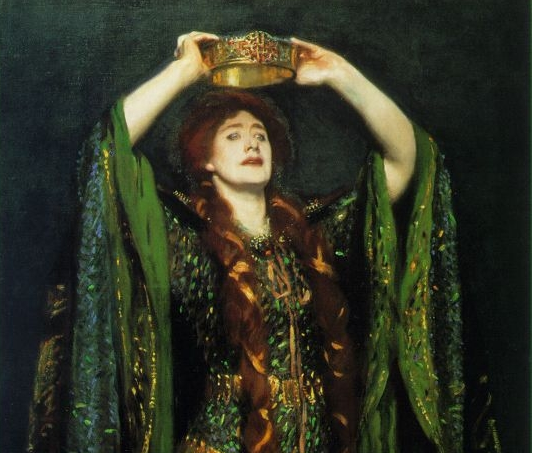
Ambition as an Act of Sacrifice
In the moral universe of Macbeth, ambition is not a simple professional drive; it is an act of total self-immolation. Lady Macbeth serves as the primary vessel for this theme, viewing the biological and the maternal as structural weaknesses in the pursuit of the "golden round." To her, power requires the subversion of nature itself.
She famously calls upon the supernatural to strip her of her humanity, seeking an androgynous state of "direst cruelty." This is more than a desire for strength; it is a rejection of the "milk of human kindness," which she perceives as a fatal infection of the soul.
"Come, you spirits / That tend on mortal thoughts, unsex me here / And fill me from the crown to the toe topfull / Of direst cruelty."
This rejection is deeply personal. Source material suggests her ruthless drive may be a psychological compensation for the grief of lost children. By trading her "milk for gall," she attempts to replace her lost maternal purpose with a crown. Furthermore, her plea to "unsex" herself represents a radical disruption of the Chain of Being—the Jacobean belief in a natural order where regicide was not just murder, but a cosmic crime that shattered reality itself.
The Fragility of the "Innocent Mask"
The play’s most dangerous weapon is the counter-intuitive power of the facade. Lady Macbeth understands that social prejudices—specifically the assumption of female fragility—can be weaponized. She navigates the divide between appearance and reality with clinical precision, exploiting the male characters' inability to see her as a threat.
She explicitly instructs Macbeth to master the art of the "innocent mask," reflecting back to the world exactly what it expects to see while harbouring a lethal intent.
"look like th’innocent flower, / But be the serpent under’t."
Yet, this mask is more brittle than she initially believes. Even at the height of her manipulation, the human beneath the "serpent" remains. In a rare moment of honesty, she admits she could not kill King Duncan herself because he "resembled her father" as he slept. This brief crack in her armour reveals the core paradox of the play: we may try to perform a role of remorseless evil, but our inherent nature remains a ghost in the machine, waiting to haunt us.
The "Eve" Archetype: Re-reading Lady Macbeth’s Role
The trajectory of the Macbeths mirrors the "Fall of Man" in the Garden of Eden. Lady Macbeth functions as the "Eve" archetype—the whisperer in the ear, the "spur" that goads a noble man toward his destruction. While Macbeth is the one who physically executes the murders, Lady Macbeth is often viewed as the "creator of evil" or the "fiend-like queen" who seeds the corruption.
Like the serpent in the garden, she uses persuasion to tempt Macbeth into "tasting" the forbidden fruit of the crown. This historical archetype frames our understanding of the tragedy; she acts as the catalyst for the collapse of order, facilitating the horrific metamorphosis of a "valiant cousin" into a "dead butcher." She doesn't just want her husband to be king; she wants to possess him, transforming his identity until he is merely an extension of her own dark will.
The Collapse of the "Clean Hands" Delusion
At the start of their conspiracy, the Macbeths display a chilling, pragmatic confidence. Lady Macbeth dismisses the psychological weight of regicide, famously claiming that "a little water clears us of this deed." She assumes that guilt is a physical stain that can be rinsed away, ignoring the inevitable psychological fallout of disrupting the natural order.
This confidence eventually dissolves into total mental fragmentation. The shift is most visible in the play's technical form: during the famous sleepwalking scene, Lady Macbeth’s speech shifts from sophisticated blank verse into "fragmented prose." This linguistic breakdown signals her internal collapse.
"All the perfumes of Arabia will not sweeten this little hand."
No longer the dominant planner, she is reduced to a shadow, frantically washing an imaginary "damned spot" of blood. Shakespeare reveals a profound psychological truth: the conscience cannot be outsmarted. Ultimately, the weight of her deeds becomes unbearable, leading her to take her own life—a definitive end to the delusion that one can ever truly have "clean hands" after committing absolute evil.
The Technicality of Fate: Logically Impossible Prophecies
Macbeth’s final undoing is facilitated by "equivocation"—the double-speak of the witches that lures him into a state of fatal over-confidence. He believes himself invincible because the conditions for his downfall appear to be logically and physically impossible. However, fate manifests through surprising technicalities:
• The Moving Forest: The prophecy that Macbeth would never be vanquished until Birnam Wood moved to Dunsinane Hill is fulfilled when the invading army uses tree branches as camouflage, creating the terrifying illusion of a forest in motion.
• The "None of Woman Born" Clause: Macbeth relies on the guarantee that no man born of a woman can harm him. This is circumvented by Macduff, who reveals he was "untimely ripped" from his mother’s womb via a Caesarean section.
These twists serve as a grim warning against hubris. Macbeth’s reliance on the technical letter of the law blinded him to the "something wicked" that was already at his door.
Conclusion: The Mirror of the "Dead Butcher"
The tragedy of Macbeth is not a distant historical fable about a medieval king; it is a mirror held up to the human soul. It tracks the agonizing descent of a "valiant cousin"—a man once celebrated for his military service—into the hollow shell of a "dead butcher," isolated by his own tyranny and the loss of the partner who once spurred him on.
The play leaves us with a haunting realization: the love of power is a corrosive force that warps every identity it touches. As we pursue our own "golden rounds," we must inevitably ask ourselves: what parts of our humanity are we currently sacrificing for our ambitions, and how certain are we that the masks we wear won't eventually become our reality?


Empowering students across the United Kingdom to reach their potential

Links
Legal
Newsletter
Join our community to stay updated on the latest courses, exclusive content, and learning resources. Subscribe now and take the next step in your educational journey!


© Copyright 2025. Step Ahead Tuition. All Rights Reserved. Powered by Lead Core.